KH
KH  FR
FR  AR
AR CN
CNVarna Conference on EU Strategic Vision for Black Sea
AKP Phnom Penh, May 15, 2026 —
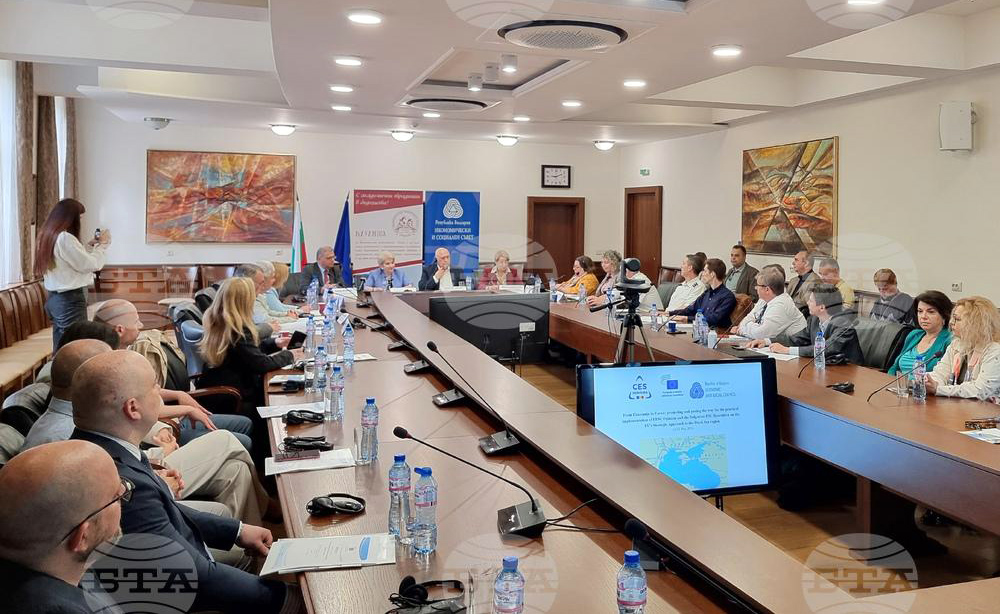
The conference "From Constanta to Varna: Promoting and paving the way for the practical implementation of EESC Opinion and the Bulgarian ESC Resolution on the EU's Strategic Approach to the Black Sea region" was held at the University of Economics in Varna on Tuesday.
The event was organized jointly by the European Economic and Social Committee and the Economic and Social Council of Bulgaria. The conference, the second of its kind, following a forum in Constanta, aims to connect the two key European Black Sea ports in a dialogue on the future of the region. It brought together representatives of European and national institutions, civil organizations, trade unions and employers' associations to discuss how the recommendations of the two advisory bodies can be implemented and integrated into Bulgaria's national positions in shaping future EU legislation.
Speaking at the forum, Meglena Plugtschieva, Foreign Policy Secretary of President Iliana Iotova, said Bulgaria supports the three pillars of the EU strategy for the Black Sea region and is calling for the establishment of a Black Sea Maritime Security Hub to protect critical maritime infrastructure and strengthen environmental security. Bulgaria has worked jointly with Romania on the development of the EU strategy for the region, she said, expressing regret that the document still lacks targeted financial resources and clear deadlines. Ensuring security in the Black Sea region requires partnership among Bulgaria, Romania and Turkiye, she added.
Speaking at the conference, Julian Popov, a European expert on climate and energy policy, senior fellow at the European Climate Organization and former caretaker Minister of Environment and Water, said that Bulgaria and Romania, together with the other Black Sea countries, have the opportunity to initiate a serious conversation on security, economy, climate and environment in the region and to become more active in communicating with European institutions and the neighbours, without waiting for Brussels to take the initiative. According to Popov, the European Strategy for the Black Sea Region represents a form of awakening - of the European Union, the European Commission and the Black Sea member states to the importance of this border of the union. Popov pointed out that although the document is well structured, it is currently devoid of financial resources and legally binding commitments, which has already earned it criticism. However, this is precisely what, according to him, is also an opportunity for the countries of the region to organize themselves and act proactively.
Speaking at the conference, Milena Angelova, European Economic and Social Committee (EESC) rapporteur on the EU strategic approach to the Black Sea and Bulgarian Industrial Capital Association (BICA) Secretary General, said that the Black Sea region is not getting the political and economic attention it deserves. Countries in the region, including Bulgaria, Romania, Georgia and Ukraine, should work actively to develop stronger infrastructure and prepare more concrete projects, Angelova said. Programming for the EU’s 2028-2034 financial framework is now under way, Angelova said, adding that Black Sea countries must set out the region’s priorities. Intensive work is needed to turn the strategic approach into a strategy with clear deadlines and funding, she added.
Speaking at the forum, Confederation of Independent Trade Unions in Bulgaria (CITUB) President Plamen Dimitrov said that hydrogen sulfide in the Black Sea should be viewed not only as a threat, but also as a potential energy resource. Dimitrov emphasized that Bulgaria is well positioned to play a leading role in the region, including by hosting the planned maritime security hub at the Nikola Vaptsarov Naval Academy. However, without dedicated EU funding for the Black Sea region, the strategy could remain largely symbolic. He called for targeted financial support and greater EU recognition of the economic impact of the war in Ukraine, particularly rising energy and transport costs.
AKP-BTA