KH
KH  FR
FR  AR
AR CN
CNPM Urges Further Modernisation of National Deep-Sea Port
AKP Phnom Penh, May 01, 2026 --
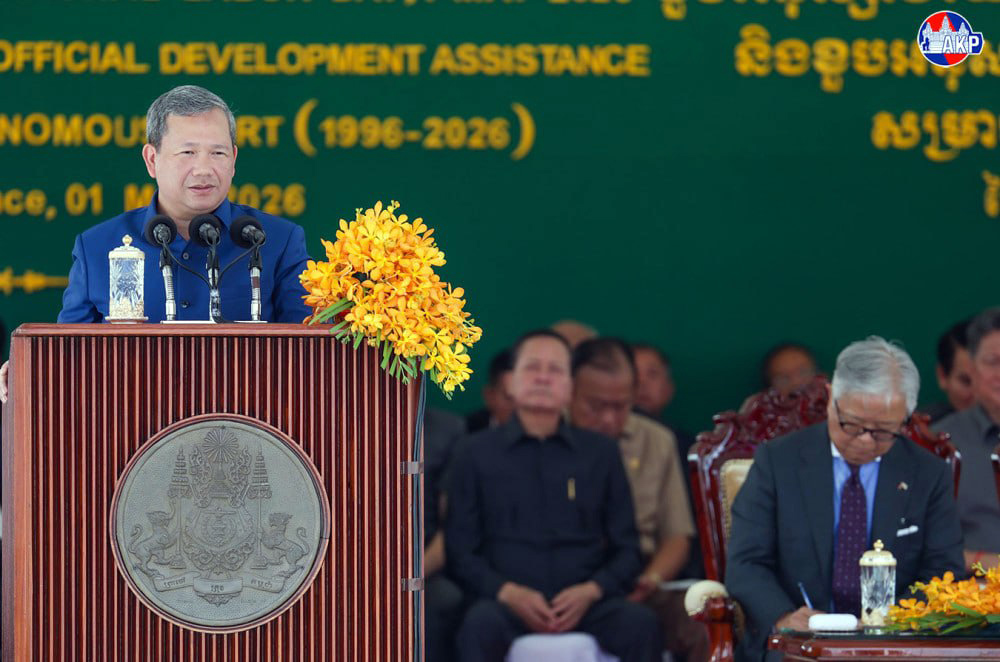
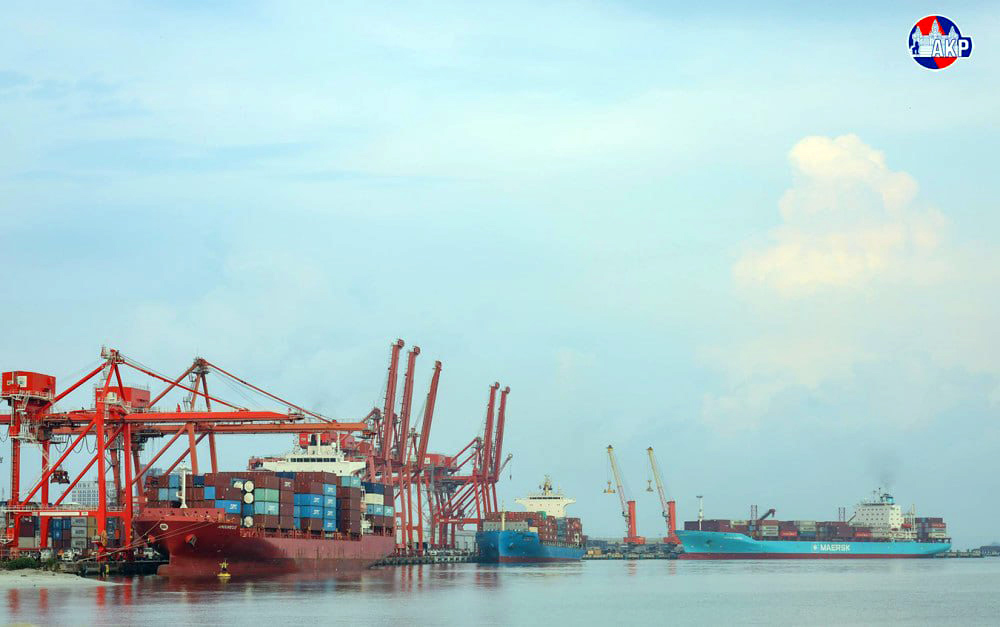
Prime Minister Samdech Moha Borvor Thipadei Hun Manet has urged the Sihanoukville Autonomous Port (PAS), Cambodia’s only deep-sea port, to accelerate modernisation and strengthen its connectivity with global ports.
Addressing a ceremony marking the 140th anniversary of International Labour Day (May 1) and the 30th anniversary of Japan’s Official Development Assistance (ODA) to PAS (1996–2026) in Preah Sihanouk province this morning, Samdech Thipadei emphasised that enhancing port capacity would facilitate stronger integration with international shipping networks.
He encouraged PAS to continue promoting institutional reforms and human capital development to improve labour productivity, service quality, and operational efficiency.
In particular, the Prime Minister highlighted the need to assess human resource requirements – both in quantity and quality – based on actual workloads, while strengthening job structures, performance evaluations, policy frameworks, and the use of information technology in human resource management.
“Modern technology is beneficial, but without capable human resources, it cannot be effectively utilised. Therefore, strengthening human capacity is essential for PAS,” he underlined.
Samdech Thipadei also called on PAS leadership, civil servants, staff, and workers to continue enhancing their performance to improve service delivery and boost the port’s competitiveness in supporting international trade.
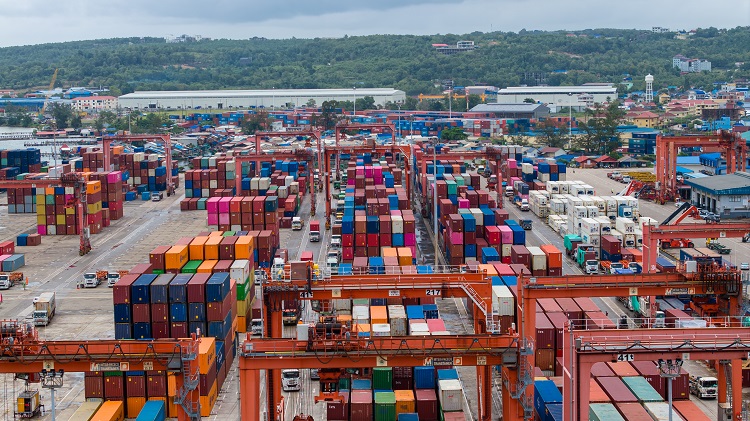
Established in 1956, PAS operated until 1975 before being interrupted and later resumed operations in 1979 on a limited scale. Since then, with continued improvements and technical assistance from development partners and friendly countries, the port has steadily expanded and modernised.
Currently, PAS is undergoing a three-phase expansion of its new container terminal under cooperation with the Government of Japan through the Japan International Cooperation Agency (JICA):
- Phase 1 involves a 350-metre-long terminal with a depth of 14.5 metres, capable of accommodating approximately 93 percent of vessels in the Asia-Pacific region. As of April 2026, the project is 66.7 percent complete and is expected to be operational in early 2027, increasing capacity to 1.45 million TEUs per year.
- Phase 2 will extend 400 metres with a depth of 16.5 metres, enabling larger vessels operating in the Indo-Pacific region to dock. Construction is scheduled to begin in September 2026, with completion in 2029, raising capacity to 2.02 million TEUs annually.
- Phase 3 will add a 430-metre terminal with a depth of 17.5 metres, allowing direct global shipping routes. The project is currently in the bidding preparation stage, with construction expected to start in early 2027 and completion by 2030, increasing total capacity to 2.64 million TEUs per year.
By Heng Panha