KH
KH  FR
FR  AR
AR CN
CNCambodia, IFC Deepen Cooperation on Green Investment and Economic Resilience
AKP Phnom Penh, February 07, 2026 --
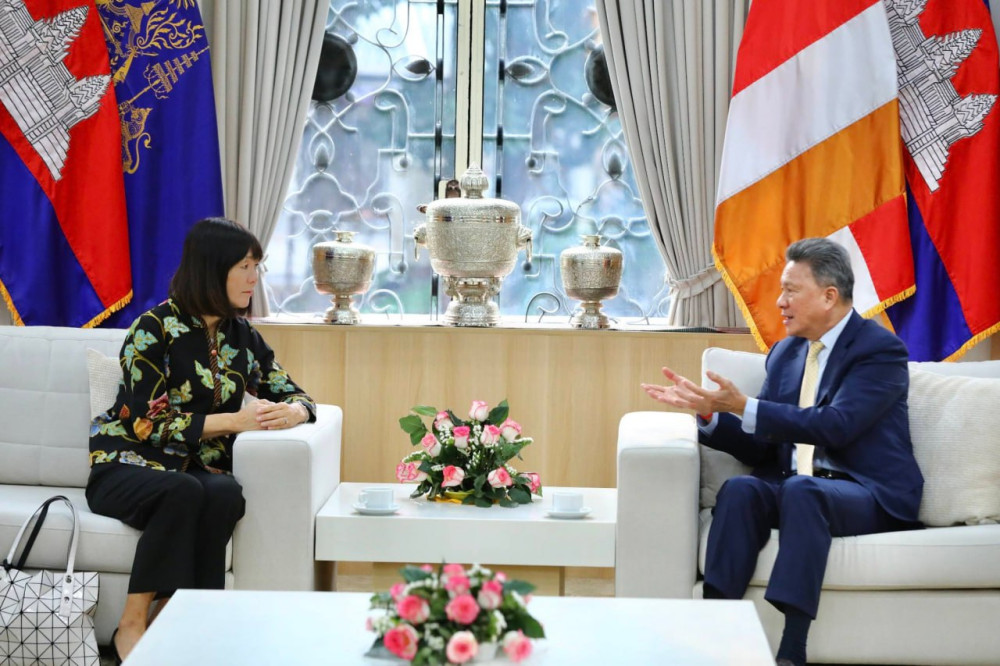
H.E. Sun Chanthol, Deputy Prime Minister and First Vice President of the Council for the Development of Cambodia (CDC), held on Feb. 6 a working meeting with Ms. Keiko Miwa, Division Director for South East Asia and the Pacific Islands of the International Finance Corporation (IFC), to strengthen strategic cooperation in promoting green investment and macroeconomic stability amid an evolving global economic landscape.
The meeting focused on expanding investment opportunities and exploring solutions to enhance Cambodia’s economic resilience in the face of ongoing shifts in global trade and supply chains. Both sides exchanged views on regional and global economic trends, with an emphasis on sustainable growth and long-term competitiveness.
A key focus of the meeting was progress on the Strategic Framework and Policy Roadmap for Eco-Industrial Parks, which was submitted to the CDC in June 2025. Discussions included proposals to develop a Green Special Economic Zone (SEZ) framework and to pilot this model in selected SEZs across the country.
H.E. Sun Chanthol highlighted the Royal Government of Cambodia’s strategic priorities in advancing structural economic reforms including attracting high value-added investment, promoting environmentally sustainable projects, and strengthening the competitiveness of the domestic private sector to support inclusive and resilient growth.
Ms. Keiko Miwa reaffirmed IFC’s continued commitment to supporting Cambodia’s green finance agenda and infrastructure development.
She outlined several key initiatives expected to reach important milestones in 2026, including the development of the Sihanoukville Logistics Complex, renewable energy projects in collaboration with Electricité du Cambodge (EDC), and technical support for the National Bank of Cambodia in developing a Green Finance Taxonomy.
In addition, IFC continues to provide advisory services to strengthen Cambodia’s financial sector, support sustainable rice production, enhance agricultural value chains, and improve labour standards and supplier financing within the garments, textiles and footwear sector.
The institution is also exploring investment opportunities in emerging industries such as automotive parts, electronics, food processing and tyre manufacturing, with many of these products targeted for export to the United States market.
By Sum Kosal