KH
KH  FR
FR  AR
AR CN
CNChina's Spring Festival spending surge becomes a global harvest
AKP Phnom Penh, February 16, 2026 —
When the Spring Festival lanterns light up the streets of her hometown Hangzhou in east China's Zhejiang Province, Lu Jing is watching the northern lights dance over Norway.
Arranging such an overseas trip during the Spring Festival -- China's most cherished time for family reunions -- would have been unthinkable for many just a decade ago. Yet this year, Lu is among millions of Chinese tourists celebrating the New Year abroad.
The 2026 Spring Festival holiday, extended to nine days, is the longest in recent years, and Chinese tourists are making the most of it. The National Immigration Administration estimates that daily inbound and outbound passenger traffic nationwide will average 2.05 million during the holiday, a 14.1 percent increase from last year.
Data from Tongcheng Travel, a leading Chinese online travel agency, shows that searches and bookings for visas, flights and hotels around the holiday have all exceeded 2025 levels.
Eager to tap into the surge, international operators are ramping up capacity, with many adding flights and sailings to meet Spring Festival demand.
MSC Cruises, for instance, has added three special voyages from Shanghai to its South Korea itineraries tailored specifically for the Chinese New Year, with one for early birds, one for the official Golden Week, and one for travelers extending their holidays.
The current travel fervor, peaking during the holiday, is attributable to sustained policy tailwinds. Last year, the Central Economic Work Conference, an annual meeting that sets the country's economic agenda for 2026, called for an action plan to boost urban and rural incomes.
Multiple government bodies have since followed up with concrete measures, including employment support, efforts to eliminate out-of-pocket expenses for childbirth under basic insurance schemes, and steps to shore up the housing sector, all aimed at strengthening consumer confidence.
These policies have fueled consumption enthusiasm, encouraging a wider demographic to travel abroad. Among the top 15 cities of origin for outbound tourists this Spring Festival, nearly 40 percent are non-first-tier cities, with many located in central and western regions, according to Tongcheng.
Years ago, these regions accounted for a much smaller share of outbound tourism. Today, their enthusiasm for overseas travel is catching up with that of China's major cities like Beijing, Shanghai and Guangzhou.
Propelled by greater spending power, Chinese travelers, especially the younger generation, are also changing the way they explore the world.
Tourists are no longer satisfied with a quick snapshot at a landmark; Tour groups are getting smaller, and itineraries more extensive. An industry report shows that private tours, customized trips and themed travel, once considered niche luxuries, have become a growing trend in this year's Spring Festival outbound trips.
"Besides iconic landmarks like the Merlion and Universal Studios, an increasing number of Chinese tourists are opting for deeper experiences like hiking the Southern Ridges, exploring Pulau Ubin's mangroves, or wandering Katong'Peranakan enclaves," a tour guide in Singapore said.
This shift toward high-value travel requires more time and higher spending, bringing greater benefits to local businesses and communities.
While Chinese tourists bring the celebration around the globe, those at home are spreading global flavors across their reunion dinner tables, turning a nation's festivity into a global harvest.
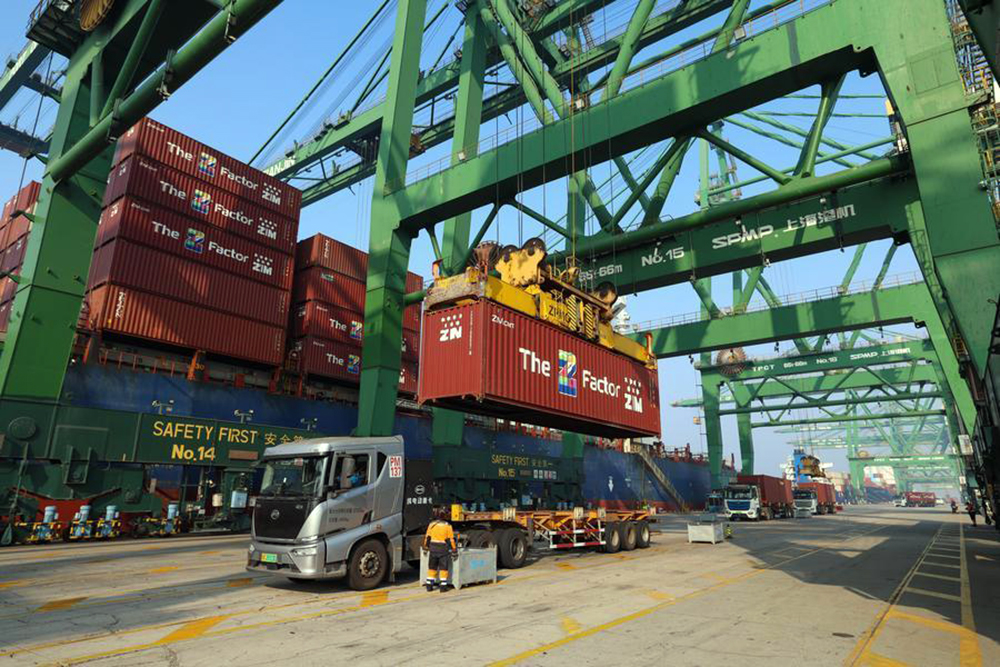
Once a novelty on imported fruit shelves, Chilean cherries have become a must-have Chinese New Year gift in just a few years. Thanks to the China-Chile free trade agreement, cherry imports to China surged nearly 19-fold from 2011 to 2024, with China accounting for 90 percent of Chile's total cherry exports by the 2023-2024 season.
AKP-Xinhua