KH
KH  FR
FR  AR
AR CN
CNOpen Letter: Thailand’s Top Leadership Must Be Brought Before a War Crimes Court
AKP Phnom Penh, December 24, 2025 --
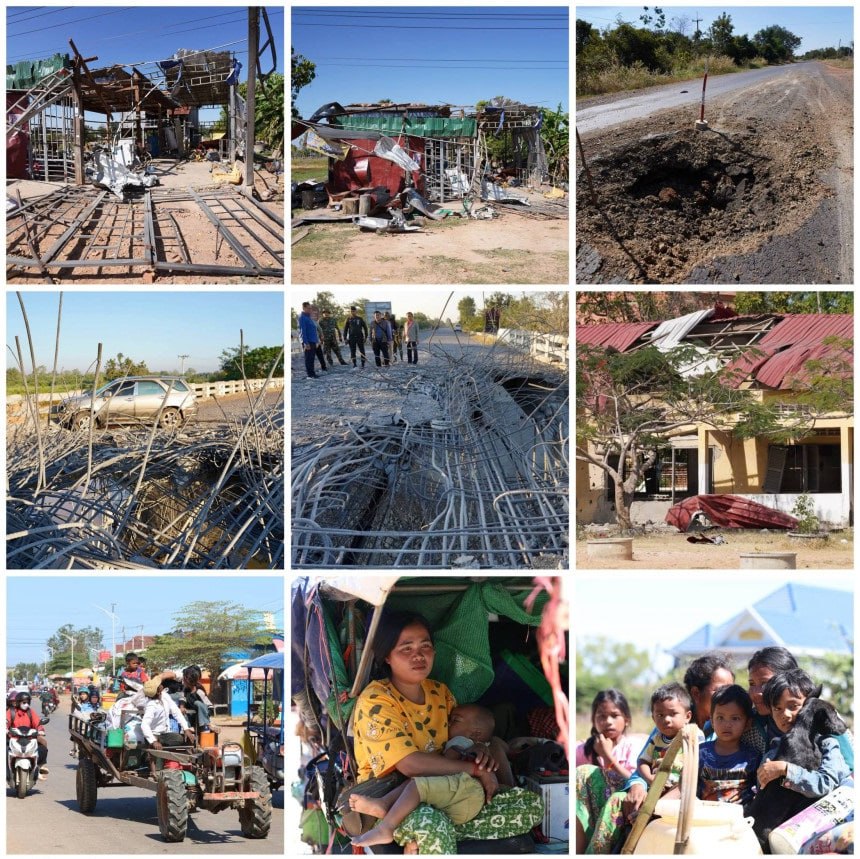
Attacks using weapons against civilians and civilian property are not acceptable under international law. The acts of violence alleged to have occurred—including attacks on civilians, schools, pagodas, ancient temples, and private homes; the cutting of bridges; the destruction of roads; the looting of property; and deep incursions into the sovereign territory of Cambodia—are grave actions that undermine humanity, peace, and the integrity of international law.
Furthermore, there are serious reports and allegations that Thailand has used cluster munitions and toxic smoke or chemical weapons in areas where civilians live. Cluster munitions are weapons that cause widespread harm and long-term danger, as many submunitions may fail to detonate immediately and remain as deadly remnants that threaten civilian lives, especially those of children. The use of toxic chemical agents constitutes a serious violation of international law and humanitarian principles, which strictly prohibit weapons that are indiscriminate in nature and severely harmful to human health.
Deliberate attacks on civilian targets and cultural heritage constitute clear violations of the fundamental principles of international humanitarian law.
The principles of “distinction” and “proportionality” were established to protect civilians from the dangers of war. When these principles are ignored or intentionally violated, such acts cannot be overlooked or excused.
Civilians—unarmed victims, including children, women, monks, and ordinary citizens—must never be made targets of weapons of war. The destruction of schools, pagodas, and ancient temples is the destruction of the future, the destruction of religion, and the destruction of the cultural identity of humanity as a whole.
Given the gravity of the alleged acts and their profound impact on lives and peace, legal accountability is required. Senior leaders who bear command responsibility or who authorised such acts cannot evade responsibility. The principle of command responsibility makes clear that leaders are accountable for crimes committed under their authority and command.
Justice is not revenge; it is a path to protecting civilians, safeguarding peace, and preventing such grave crimes from happening again. Therefore, bringing Thailand’s top leadership before a war crimes court is a necessary step to uncover the truth, ensure that justice is served, and uphold the dignity of international law.
True peace can only be achieved when crimes are not ignored and when those responsible stand equally before the law.
By Chan Chanboribo
Extraordinary and Plenipotentiary Ambassador of the Kingdom of Cambodia to the Republic of Bulgaria, Romania, Greece, Cyprus, Lithuania, Latvia, Estonia