KH
KH  FR
FR  AR
AR CN
CNOPINION: I Say! One Claim, Another Reality: Thailand’s Attacks and Questions of War Crimes
AKP Phnom Penh, December 22, 2025 --
Thailand’s prime minister has claimed that the use of military force against Cambodia was intended to “dismantle online criminal networks”.
At first glance, the assertion may appear plausible. But in international relations, words cannot replace facts. What the world ultimately judges is conduct, not rhetoric or political statements.
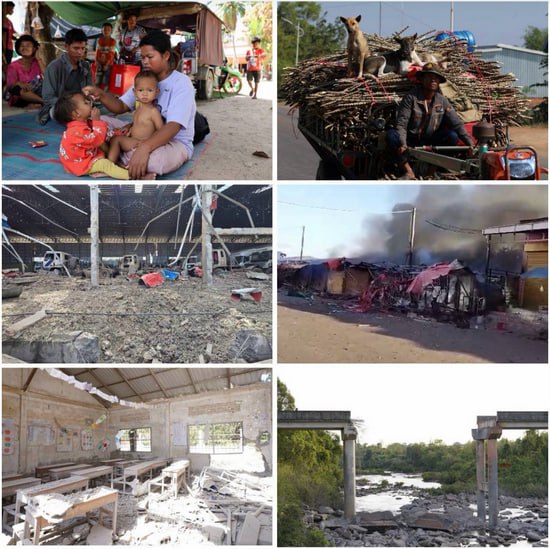
When the alleged actions are examined more closely, Thailand’s military operations show little sign of being a law-enforcement exercise. Instead, they are accused of targeting Buddhist temples, schools, civilian homes, bridges and roads—objects that are civilian in nature. Such attacks cannot reasonably be justified as policing or security measures. Rather, they point clearly to an act of aggression against Cambodia’s sovereignty.
Under international humanitarian law, attacks on civilians and civilian infrastructure are strictly prohibited. Temples and schools are not military targets. Civilian homes are not battlefields. The destruction of bridges and roads used by civilians in their daily lives risks triggering serious humanitarian consequences. If such acts are carried out deliberately, or without respect for the principles of proportionality and precaution, they may amount to war crimes.
Against this backdrop, attempts to cloak the use of military force on another state’s territory under the banner of “combating online crime” are not only politically disingenuous, but also undermine the foundational principles of international law. If any state were free to attack a neighbouring country simply by claiming it was “fighting crime”, the international system itself would descend into chaos.
By Chea Chanboribo
Cambodian Ambassador to Bulgaria, Romania, Greece and Cyprus
(The views expressed are his own.)