KH
KH  FR
FR  AR
AR CN
CNCambodia’s Deputy PM Urges Prey Veng Residents to Plant Trees, Preserve Forests Amid Climate Threats
AKP Phnom Penh, October 22, 2025 --
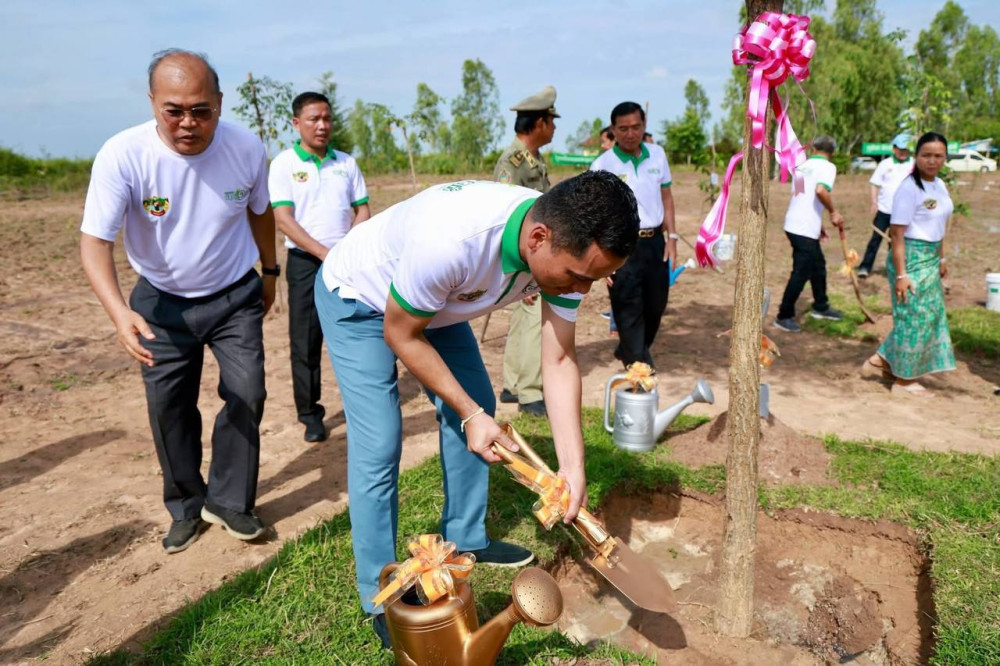
Cambodia’s Deputy Prime Minister and Minister of Interior H.E. Abhisantibindit Sar Sokha on Tuesday called on residents of Prey Veng province to plant at least one tree annually and actively safeguard forests, emphasising collective action to combat deforestation, climate change, and biodiversity loss.
Speaking at a tree-planting ceremony marking national Arbour Day in Ba Phnom district, H.E. Abhisantibindit Sar Sokha highlighted the environmental toll of rapid urbanisation, economic expansion, and human settlement growth. “These pressures are eroding our natural resources and exacerbating global warming,” he said, addressing hundreds of local officials, civil servants, and community members at the ceremony.
“Every citizen must plant at least one tree each year—at home, schools, pagodas, public spaces, or workplaces,” he urged. “This ceremony is symbolic; a truly greener world demands participation from people everywhere, including Prey Veng.”
In practical directives, the Deputy Prime Minister instructed commune and district authorities to draft detailed plans specifying priority tree and crop species. These must be submitted to the provincial administration and the Department of Agriculture, Forestry and Fisheries for compilation and national review, enabling targeted support to mitigate climate impacts.
H.E. Abhisantibindit Sar Sokha, who chairs the Royal Government’s Working Group for Prey Veng Province, further rallied the Provincial Council, governors, line ministries, local administrations, armed forces, and residents to prioritise natural resource conservation and sustainable development, especially in agriculture and environmental protection.
The event underscores Cambodia’s broader push for reforestation, with the country aiming to restore 1 million hectares of forest by 2030 under its National Forest Programme. Prey Veng, an agricultural heartland, has seen deforestation rates rise 15 percent in the past decade, according to government data, making such initiatives critical.

By K. Rithy Reak