KH
KH  FR
FR  AR
AR CN
CNOver 200 Female Officials Visit Border Posts to Gain Firsthand Insight into Cambodia’s Territorial Integrity and Sovereignty Protection Efforts
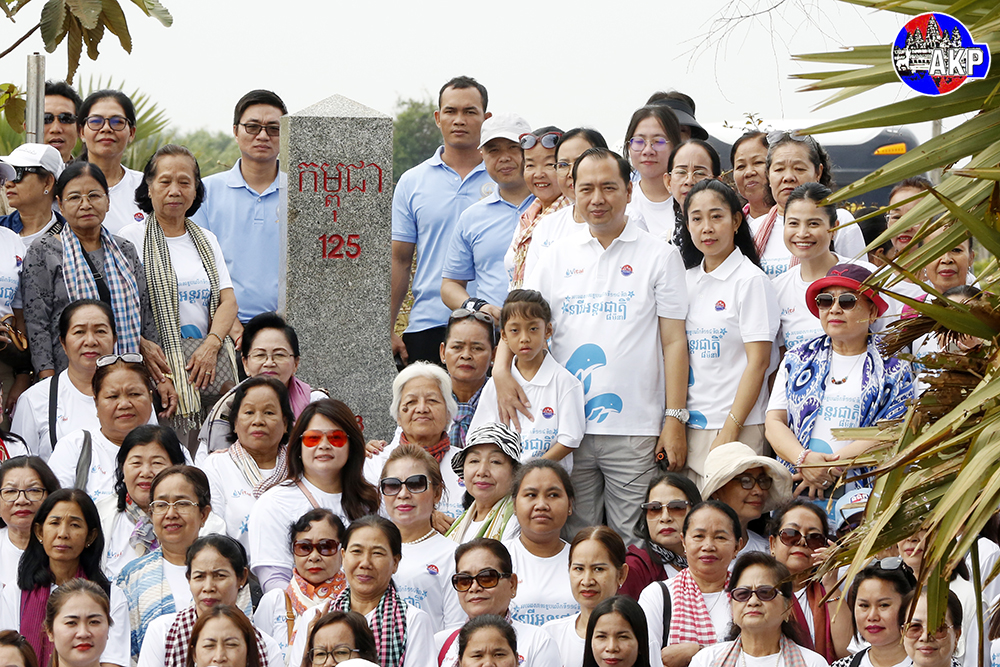
AKP Thbong Khmum, March 08, 2025 -- In celebration of the 114th International Women’s Day 2025, under the theme “For ALL Women and Girls: Rights, Equality and Empowerment,” H.E. Neth Pheaktra, Minister of Information, and his spouse Lok Chumteav Tuy Serey Ratanak, Honorary President of the Cambodian Women’s Association for Peace and Development at the Ministry of Information, led a delegation of more than 200 female officials on a field visit to Cambodia’s border areas on Mar. 8-9.
Singapore Ambassador to Cambodia H.E. Ms. Teo Lay Cheng also joined the two-day trip.
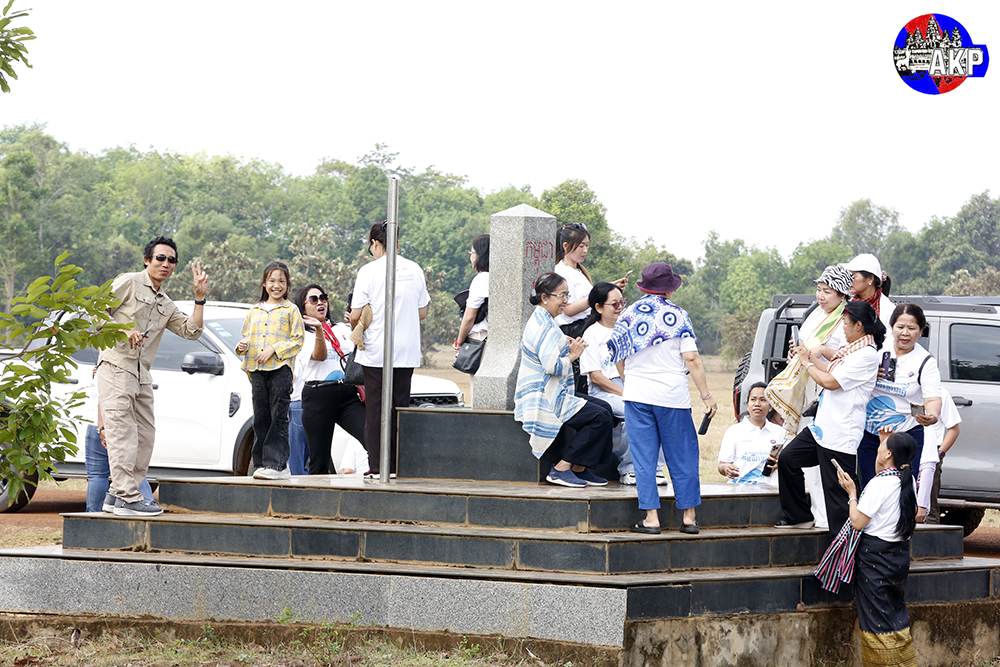
The visit began in Ponhea Krek district, Thbong Khmum province, at Border Post No. 125, where the delegation observed firsthand the Cambodian government’s ongoing efforts to safeguard the nation’s territorial integrity and sovereignty.
The delegation will continue their journey to other key border regions in Kratie province, including border demarcation lines, key border markers, and the December 2 Memorial Monument.
This historic site marks the founding of the Kampuchean United Front for National Salvation (KUFNS) —a movement led by Samdech Chea Sim, the late President of the ruling Cambodian People’s Party (CPP), Samdech Heng Samrin, current Honorary CPP President and Samdech Techo Hun Sen, current CPP President, along with other leaders of the CPP—which played a crucial role in overthrowing the Democratic Kampuchea (Khmer Rouge) regime.
The Ministry of Information organised this field visit to provide female officials with a deeper understanding of Cambodia’s sovereignty, territorial integrity, and border protection efforts.
H.E. Neth Pheaktra emphasised that knowing and protecting national territory are a fundamental responsibility for all government officials.
He highlighted that Cambodia’s border protection strategy is built on four key pillars: 1. Clear Territorial Delimitation – Based on officially recognised maps, legal documents, and agreements between Cambodia and neighbouring countries. 2. Physical Border Markers – Ensuring all border posts are precisely placed in accordance with bilateral agreements and international norms. 3. Border Road Development – Strengthening Cambodia’s sovereign presence by constructing strategic border roads. 4. Infrastructure and Economic Development – Improving living conditions for border communities through infrastructure investments.
The Minister of Information reaffirmed that the Royal Government of Cambodia has made tremendous efforts in border demarcation, working closely with neighbouring countries through diplomatic and legal frameworks to ensure mutual recognition of border agreements.
This field visit serves as a powerful testament to the Cambodian government’s unwavering commitment to protecting national sovereignty and territorial integrity.
It also reinforces the country’s dedication to maintaining peace, security, and socio-economic stability for the benefit of all Cambodian citizens.

By K. Rithy Reak