KH
KH  FR
FR  AR
AR CN
CNRice Buffer Could Help Shield Cambodia from El Niño Exposure
AKP Phnom Penh, October 5, 2026 --
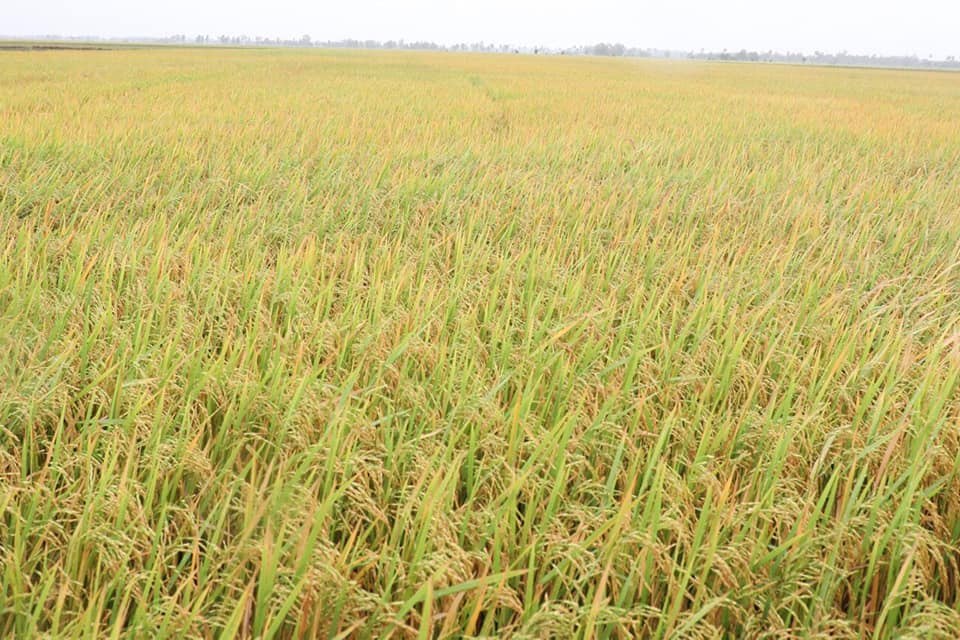
Cambodia’s relatively high rice stocks and its position as a net food exporter could help cushion the agricultural sector’s exposure to the super El Niño now taking shape across the Pacific Ocean.
Figures published by the ASEAN+3 Macroeconomic Research Office (AMRO) on Monday show that Cambodia has a rice-stock buffer of 3.1 months — trailing only China (8.6 months) and Thailand (3.6 months).
With the exception of Japan (2.9 months), other economies in the region have rice stocks of 2 months or less.
AMRO meanwhile estimates Cambodia’s net food exports at 0.2 percent of GDP. Most economies in the region are net food importers.
Based on agriculture’s share of GDP, Myanmar is the most exposed economy to the El Niño weather pattern (25.3 percent) followed by Laos (16.6 percent) and Cambodia (16.1 percent).
In terms of agriculture’s share of employment, Laos is the most exposed (68.6 percent) followed by Myanmar (45.0 percent) and Cambodia (33.4 percent).
In all three countries, food accounts for a relatively high share of consumer price indexes — 58.5 percent in Myanmar, 46.1 percent in Laos and 43.3 percent in Cambodia.
FOOD STOCKS AS CUSHION
But such structural exposure “does not translate mechanically into realised economic effects,” AMRO says.
“Irrigation coverage and usable reservoir storage can attenuate the effects of rainfall shortfalls on production.”
At the same time, “food stocks, diversified import sources and established procurement arrangements can cushion temporary supply disruptions.
“The effectiveness of these buffers depends on their adequacy,
accessibility and timely deployment, including the capacity of domestic distribution systems to direct supplies where needed.”
The Asian Development Bank reported last month that Cambodia was among only five Southeast Asian countries to prepare for El Niño as of early September, the others being Indonesia, the Philippines, Thailand and Vietnam.
According to the AMRO report released Monday, El Niño is now “firmly established and likely to become very strong toward end-2026, with its macroeconomic effects likely to extend into 2027.”
The impact “will depend not only on the event’s meteorological intensity, but also on the intersection of adverse weather with structural exposure, underlying vulnerabilities and available buffers,” the multilateral think tank says.
By Sao Da (Photo: Agriculture Ministry)