KH
KH  FR
FR  AR
AR CN
CNJapanese Firms Eye Preah Sihanouk Investment Amid Rising Seafood Demand
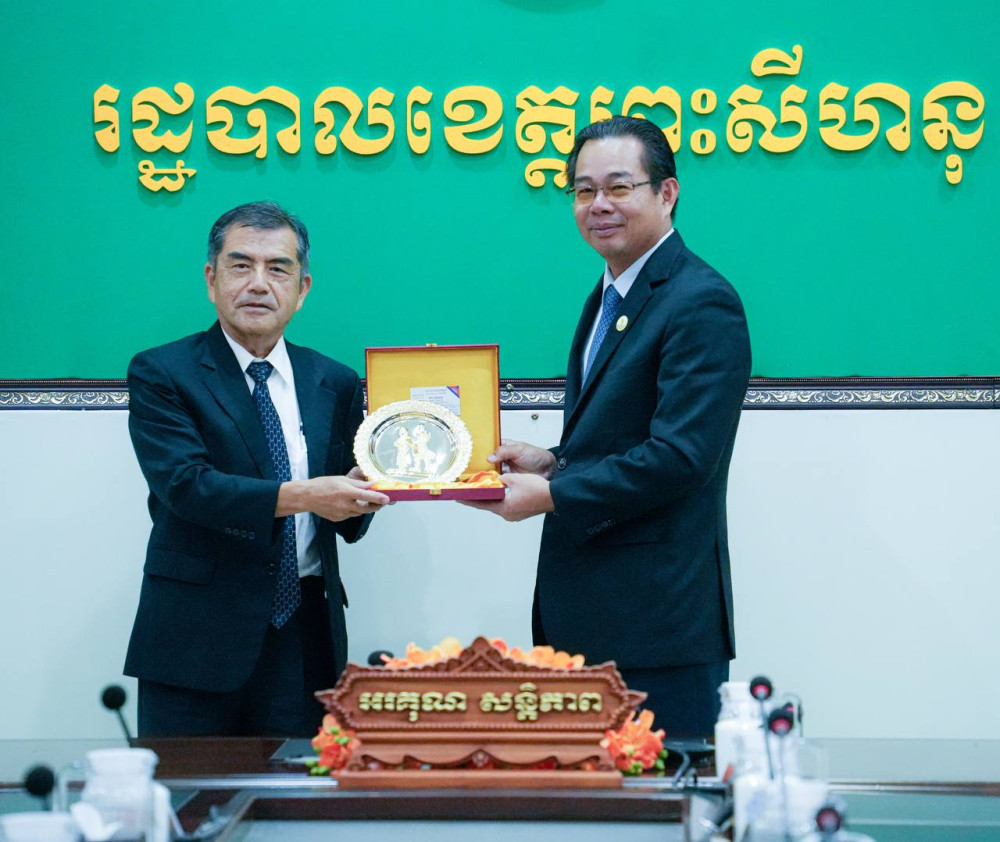
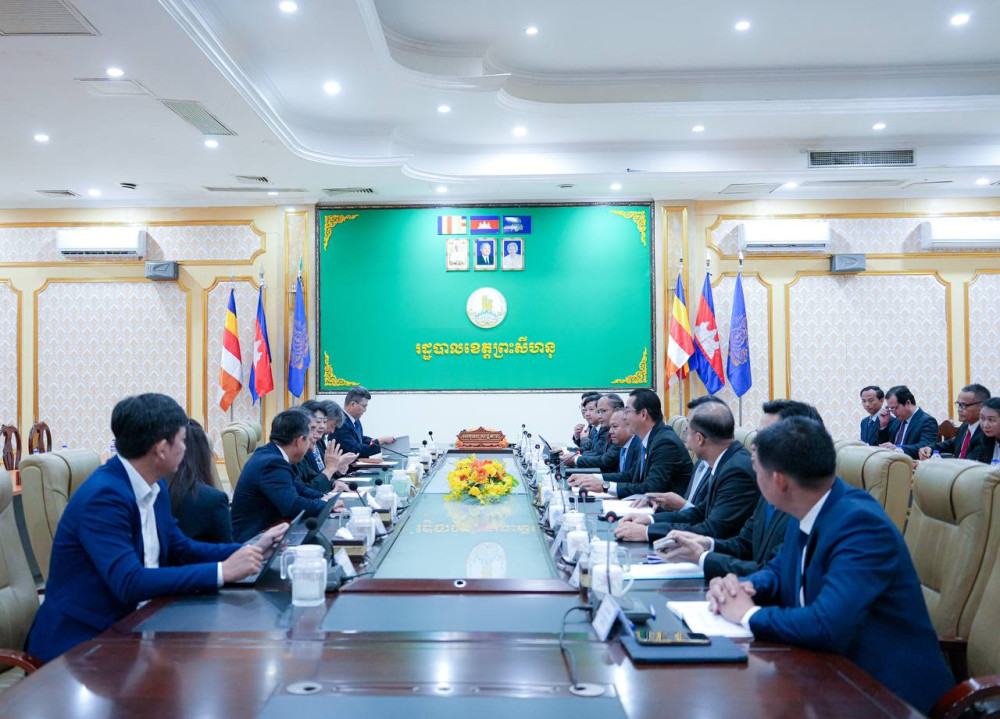
AKP Phnom Penh, August 27, 2026 -- A delegation of Japanese experts, led by Mr. Michiaki Takahashi of the Association for Overseas Technical Cooperation and Sustainable Partnerships (AOTS), met with H.E. Mang Sineth, Governor of Preah Sihanouk Province and Chairman of the Provincial Investment Sub-Committee, on Thursday to explore local business opportunities and discuss investment potential.
The visit comes under a programme initiated by Japan's Ministry of Economy, Trade and Industry (METI) aimed at improving trade and investment environments.
Six Japanese companies considering investment in Cambodia are currently evaluating potential sites, specifically focusing on Preah Sihanouk and Kampong Speu provinces.
Mr. Michiaki Takahashi noted that due to declining squid catches in Japan, Japanese investors are particularly interested in sourcing seafood – especially squid and oysters – from Preah Sihanouk to meet domestic demand.
Governor H.E. Mang Sineth highlighted the province's economic dynamics, noting a 5 percent GDP growth rate in 2025 and its strategic infrastructure connecting sea, land, and air transport to ASEAN and global markets. Under the national master plan, Preah Sihanouk is designated as a Model Multi-Purpose Special Economic Zone (SEZ), structured into four distinct development zones: transport/industry, integrated urban-commercial centre, island ecotourism, and agriculture/aquaculture.
The province currently houses seven special economic zones and offers tailored investment incentives – including administrative facilitation and import/export tax exemptions – under a special Royal Government initiative running through 2027.
Addressing the seafood sector, H.E. Mang Sineth stated that Preah Sihanouk features 17 fishing communities generating an annual yield of 50,000 tonnes, including 4,000 tonnes of squid. He extended a strong welcome to Japanese firms, stressing that streamlined logistics, reduced transport costs, and dedicated local coordination provide an optimal environment for investment.
By K. Rithy Reak