KH
KH  FR
FR  AR
AR CN
CNHealth Minister Highlights Equity, Climate Resilience and Human-Centred AI at 9th APPF-GH
AKP Phnom Penh, August 11, 2026 --
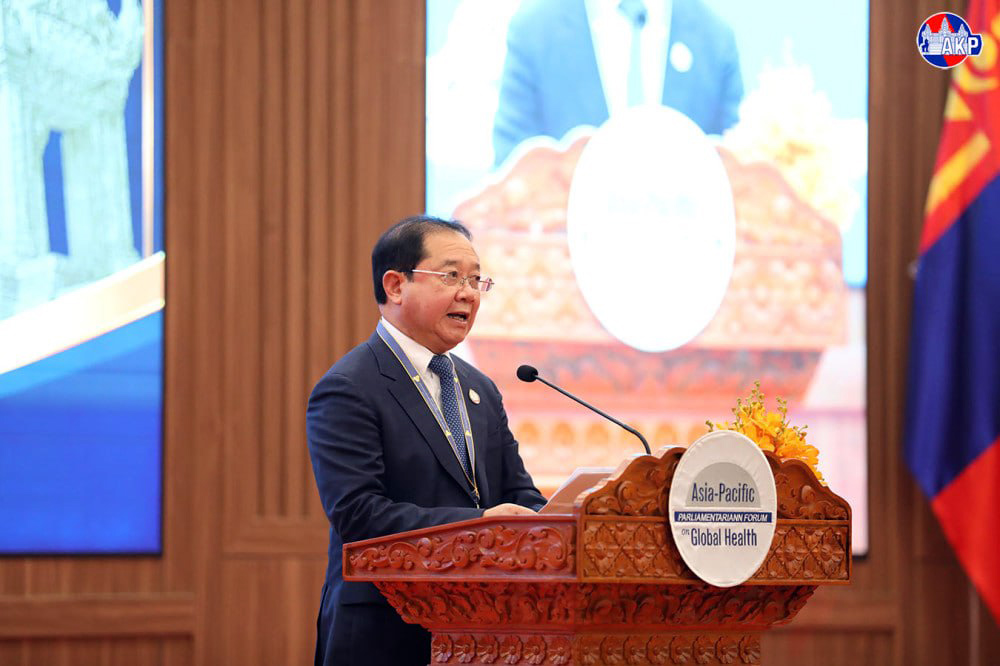
Cambodian Minister of Health H.E. Prof. Chheang Ra has called for stronger equity, quality and trust in healthcare systems to advance universal health coverage (UHC), stressing that UHC is not merely a matter of financing, hospitals, medicines or health insurance, but a social contract that ensures everyone has access to healthcare regardless of where they live, their age, income or ability to pay.
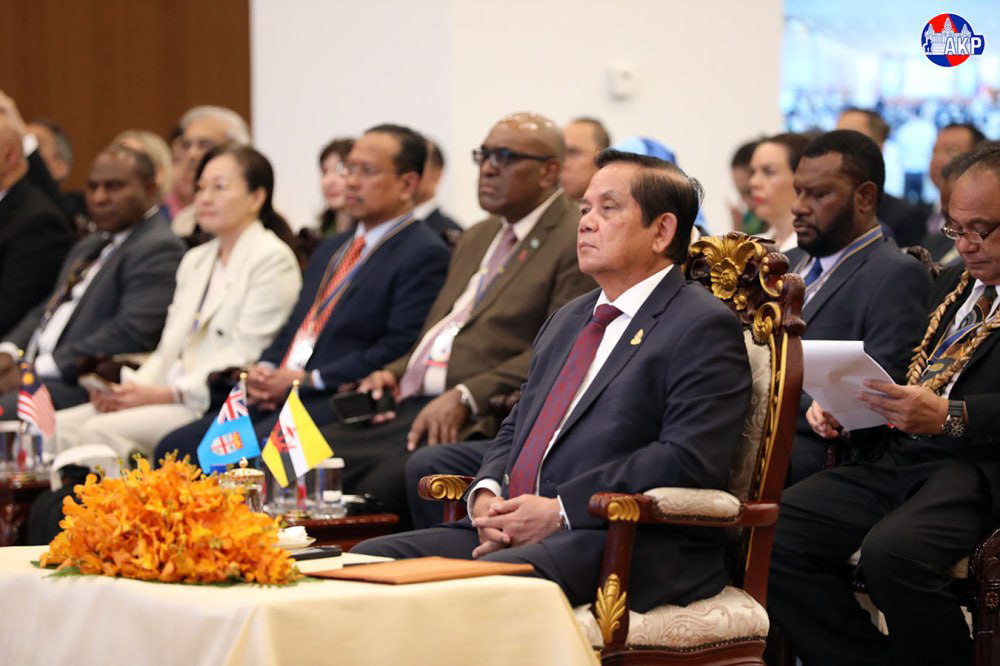
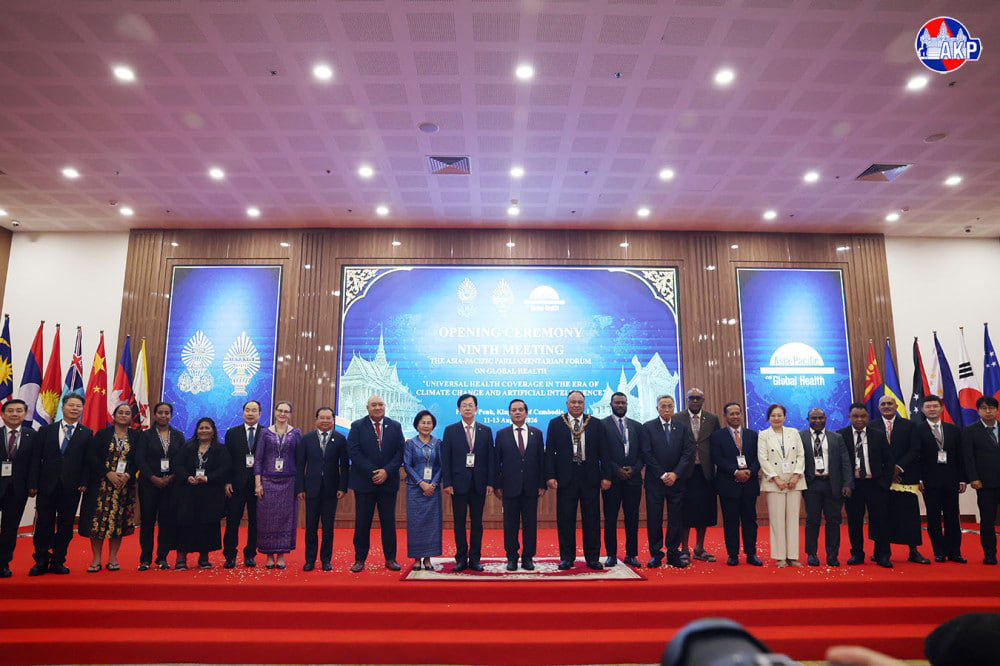
He made the remarks while delivering a keynote address at the 9th Asia-Pacific Parliamentarians’ Forum on Global Health (9th APPF-GH), being hosted by Cambodia from Aug. 11 to 13 at the National Assembly Palace in Phnom Penh under the theme “Universal Health Coverage in the Era of Climate Change and Artificial Intelligence.”
H.E. Prof. Chheang Ra said Cambodia is advancing UHC through a pragmatic, primary healthcare-led approach aimed at strengthening health-system resilience, working closely with communities and other sectors, and addressing the broader determinants of health. Stronger primary healthcare, he noted, can promote greater equity while improving the efficiency of public health spending.
However, he pointed to several remaining challenges, including shortages of health workers compared with WHO-recommended ratios, insufficient infrastructure, a large and fragmented private health sector with quality and safety concerns, and geographical disparities in the distribution of health services. Up to 70 percent of specialist physicians are concentrated in Phnom Penh, he noted.
The Minister underlined that Cambodia's UHC reforms are guided by principles of universality, a multisectoral approach to expanding health protection, inclusive benefit packages reflecting community needs, and strategic purchasing based on health outcomes, population needs, efficiency and transparency.
Under the Royal Government of Cambodia's Roadmap Towards Universal Health Coverage 2024-2035, the country has set quantitative targets for 2035, including protecting 80 percent of the population against health risks, achieving 80 percent coverage of essential health services, and reducing out-of-pocket health expenditure to 35 percent.
Addressing climate change, H.E. Prof. Chheang Ra said environmental changes are redefining the requirements for resilient health systems. Extreme heat, floods, droughts, changing patterns of vector-borne diseases, food insecurity, air pollution and population displacement can all have significant impacts on public health.
A resilient health system must be capable of protecting communities during such events while ensuring that hospitals and health centres continue operating and health workers remain prepared, he said, highlighting the importance of the One Health approach, which recognises the interconnectedness of human, animal and environmental health.
The Minister also described artificial intelligence (AI) as both a major opportunity and a significant responsibility for the health sector. AI can help analyse data more rapidly, support diagnosis, improve the use of health workers, strengthen disease surveillance, predict disease outbreaks and bring medical expertise closer to people living in remote areas.
However, he stressed that technological advances must remain centred on people. “Innovation cannot replace compassion, technology cannot replace responsibility, and efficiency cannot replace equity,” he said, emphasising that AI should strengthen human capabilities rather than diminish human responsibility.
H.E. Prof. Chheang Ra underscored that achieving UHC cannot be the responsibility of the Ministry of Health alone. It requires strong support from parliamentarians and cooperation across political, legislative, financial, social protection, education, infrastructure and environmental sectors.
He called on parliamentarians, as representatives of the people, to support improvements in healthcare quality, particularly for vulnerable groups, including the poor, people living in remote areas, older persons, persons with disabilities, women and children.
Concluding his address, the Minister proposed three key priorities for the forum: protecting every person by making equity a core criterion of health policies; preparing every health system to withstand and respond to pandemics, climate change, disasters and demographic shifts; and placing every form of innovation at the service of people by harnessing data, digital technology and AI while ensuring that healthcare remains humane.
He also emphasised that strong governance and leadership are universally critical to achieving successful health reforms, stressing the shared commitment of countries to strengthening these factors and ensuring that no one is left behind.
By C. Nika