KH
KH  FR
FR  AR
AR CN
CNGeneva Global Dialogue: Cambodia Charts Course for Inclusive AI Governance Amidst Rapid Technological Advance
AKP Phnom Penh, July 07, 2026 --
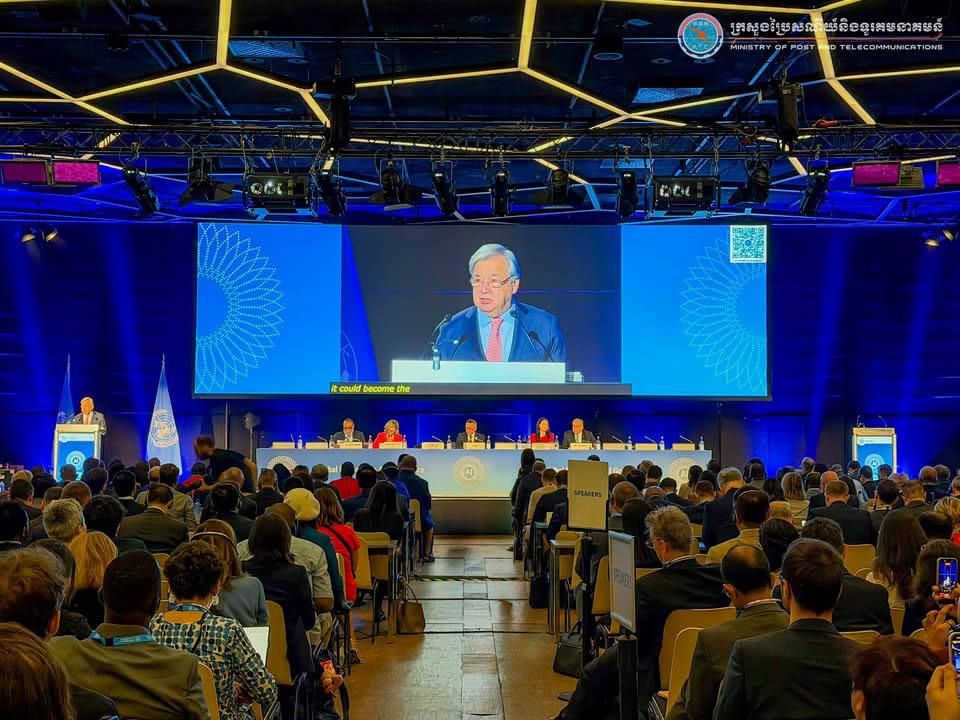
Over 4,000 delegates from more than 170 countries convened in Geneva on Monday for the inaugural Global Dialogue on AI Governance, as international leaders confronted the accelerating gap between technological advancement and regulatory oversight.
Presided over by UN Secretary-General H.E. António Guterres and co-chaired by El Salvador and Estonia, the high-level forum brought together heads of state, government and digital ministers to establish common ground for artificial intelligence oversight.
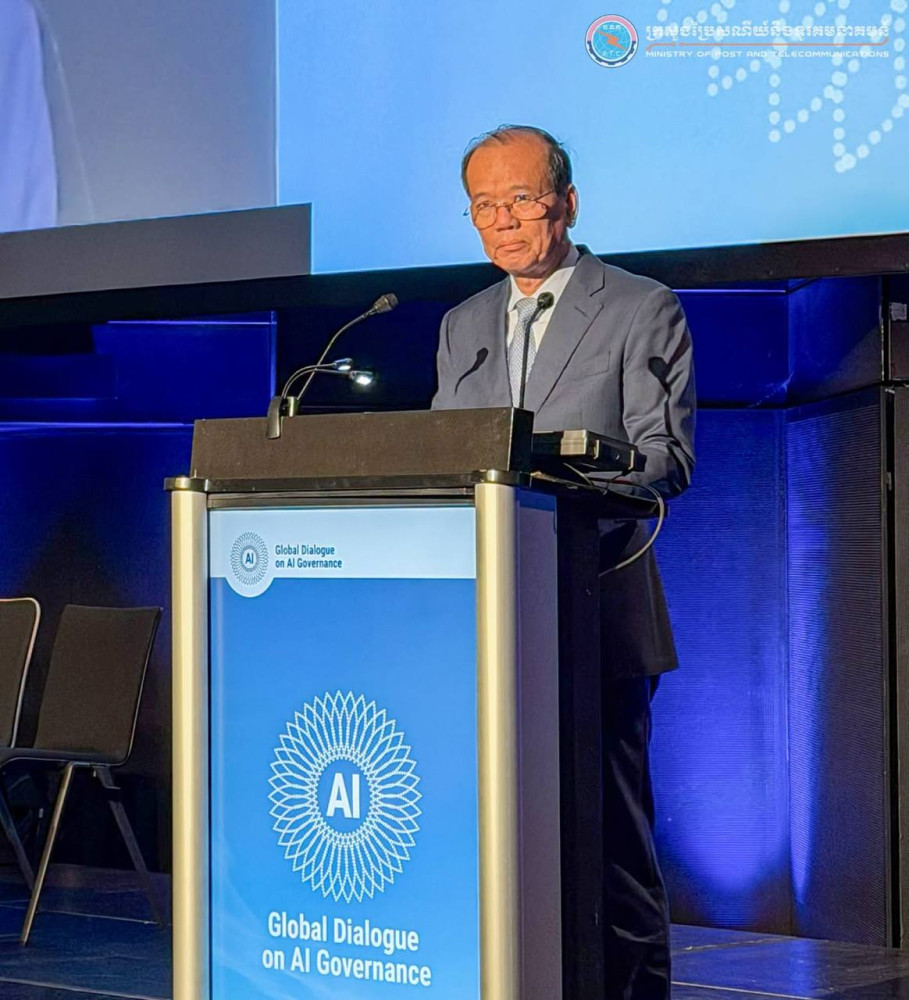
Representing Prime Minister Samdech Moha Borvor Thipadei Hun Manet, Cambodian Minister of Post and Telecommunications H.E. Chea Vandeth delivered a keynote address outlining a strategic five-point framework to shape equitable and forward-looking international AI policy.
Minister Vandeth articulated a comprehensive vision for global cooperation, emphasising that governance structures must balance innovation with accountability. The five core pillars include:
Trust-Driven Innovation: Frameworks must unlock AI’s transformative potential while expanding accessibility and reinforcing public confidence in emerging technologies.
Proactive Risk Mitigation: Regulatory systems must be agile and anticipatory – capable of identifying and neutralising threats before they materialise, rather than reacting to crises post-factum.
Multi-Stakeholder Inclusivity: Reflecting broader ASEAN priorities, Cambodia advocates for deep partnerships with the private sector, academic institutions, civil society, and citizens as co-architects of AI policy.
Global Intelligence Sharing: The international community must commit to joint capacity-building for regulators, real-time information exchange on emergent trends, and systematic tracking of AI-related incidents.
Corporate Accountability: Cambodia explicitly called upon global technology firms to engage in genuine, transparent cooperation with governments to ensure responsible AI administration.
While delegates acknowledged AI’s unprecedented capacity to accelerate socioeconomic development, the forum was underscored by urgent scientific consensus. The International Scientific Panel on AI – comprising 40 independent experts from across the globe – presented its inaugural findings to member states, delivering a sobering assessment: the velocity of AI capability growth is currently outstripping the world’s regulatory response.
“Development remains concentrated within a handful of nations, yet the socio-economic repercussions will be universal,” the panel’s report stated. The experts urged immediate political intervention to steer AI evolution toward outcomes that serve the collective interests of humanity, warning that inaction could entrench global inequalities and expose populations to unmanaged systemic risks.
The Geneva Dialogue marks a critical inflection point in multilateral efforts to codify the first truly global framework for artificial intelligence.
By K. Rithy Reak