KH
KH  FR
FR  AR
AR CN
CNIndian Embassy Highlights Findings of India’s 6th National Family Health Survey and Health Sector Progress
AKP Phnom Penh, June 16, 2026 --
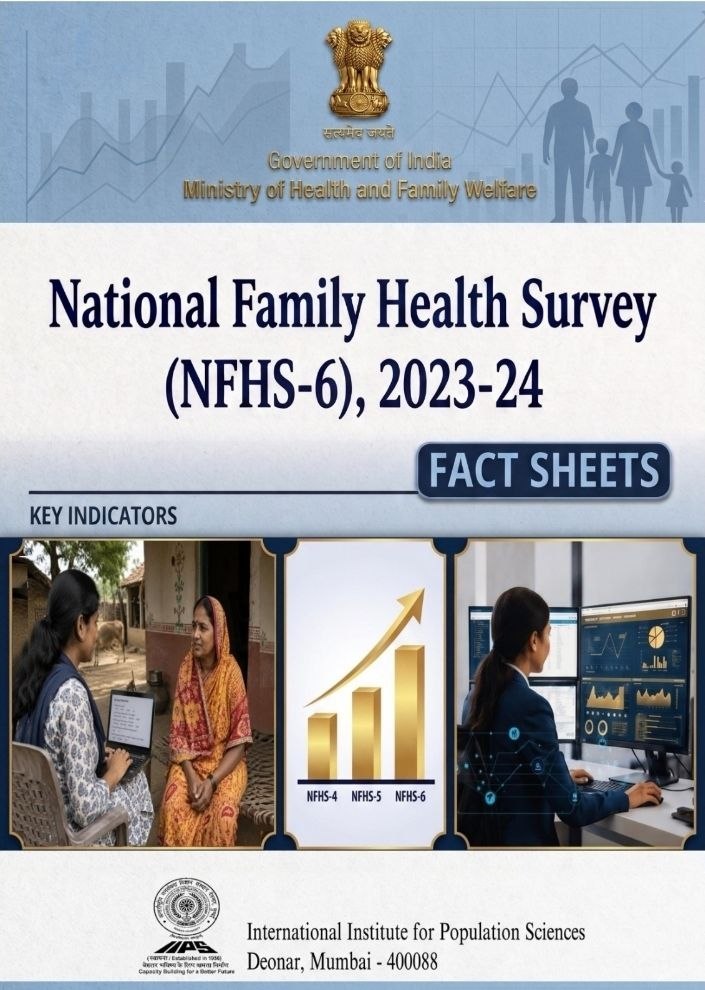
The Indian Embassy in Phnom Penh held a press briefing on India’s newly released 6th National Family Health Survey (NFHS-6) and developments in health sector in India.
Addressing the media, Ambassador of India to Cambodia Shri Vanlalvawna Bawitlung underlined India’s significant achievements in public health, digital inclusion, and women's empowerment initiatives during the past decade.
During the presentation, he highlighted how India's data-driven governance has resulted in achieving important milestones in India’s public health journey. Covering nearly Six hundred seventy-nine thousand households and over seven hundred thousand women nationwide, across 715 districts, the survey provides valuable insights into key areas such as maternal and child health, nutrition, fertility, family planning, immunization, non-communicable diseases, women’s empowerment etc.
The Ambassador emphasised that India's success in scaling health insurance whose coverage has expanded more than twelve-fold, reflecting the success of government-led initiatives aimed at strengthening financial protection in healthcare. Further, India has achieved improved drinking water access at 96.5 percent, and health insurance coverage rising sharply to 60.2 percent. Access to improved drinking water has become nearly universal, increased from 87.6 percent in 2005-06 to 96.5 percent in 2023-24 reflecting the paradigm shift in service delivery.
H.E. Ambassador further mentioned that maternal healthcare achieved 90.6 percent institutional deliveries and 95.9 percent antenatal care coverage—offering critical, real-world blueprints for developing nations aiming to optimise public health infrastructure on a budget. He also highlighted the significant role played by 187,000 Health & Wellness Centres and over 1.03 million Accredited Social Health Activists in this journey. A major focal point of the briefing was the rapid closure of the digital and financial gender gap. He explained how targeted digital policies pushed women's bank account ownership from a meager 15 to 89 percent, while simultaneously doubling female internet literacy to 64.3 percent in recent years. During the last decade, India has also achieved full immunisation coverage of 87.1 percent and vaccinations received at public health facilities increased to 95.6 percent reflecting community trust in public health system.
The briefing on NFHS-6 and developments in health sector in India presented evidence of substantial improvements in living standards, healthcare access, maternal and child health, financial inclusion, digital empowerment and women's agency over the past decades. It presented the picture that India has largely consolidated its demographic transition while entering a new phase characterised by a greater focus on the quality of healthcare, nutritional outcomes, and the prevention and management of lifestyle-related diseases.
Large-scale national surveys such as the National Family Health Survey (NFHS) play a critical role in informing policy formulation and planning by facilitating the early identification of emerging challenges, assessing the impact of interventions, and monitoring key social, demographic, and health indicators across the country. Overall, the findings reaffirm India’s steady progress towards achieving the Universal Health Coverage and the Sustainable Development Goals (SDGs). With continued focus on inter-sectoral convergence, strengthened last-mile delivery, and inclusive development, India is well-positioned to consolidating these gains and advancing the health and well-being of the population.
The Embassy concluded the briefing by reiterating India's commitment to expanding bilateral cooperation with Cambodia in multi-faceted areas.
AKP-Indian Embassy