KH
KH  FR
FR  AR
AR CN
CNEnergy Minister Highlights Renewables and Regional Connectivity as Key to Cambodia’s Resilience
AKP Phnom Penh, June 12, 2026 --
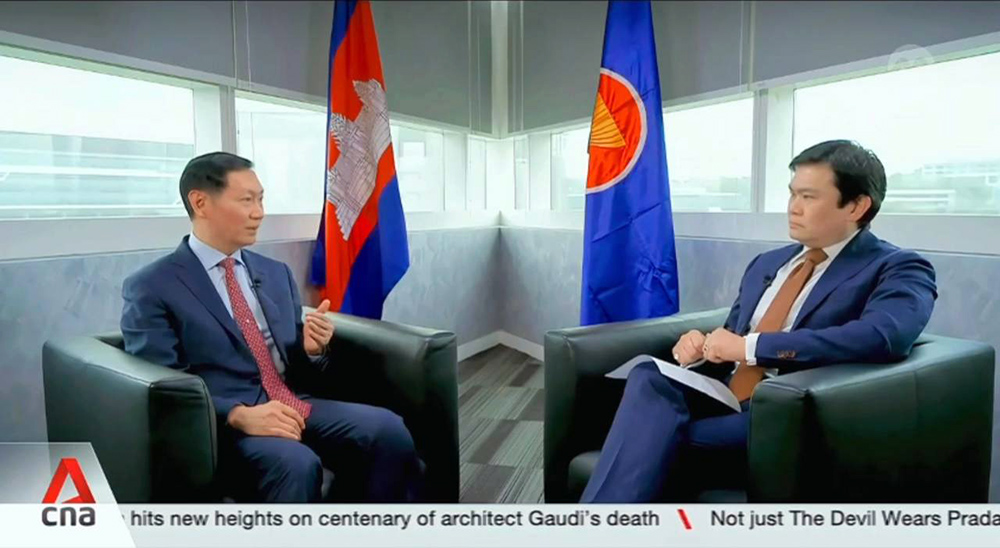
Cambodia is strengthening its energy resilience and accelerating its transition toward renewable energy to mitigate the impact of rising global fuel prices, according to H.E. Keo Rottanak, Minister of Mines and Energy, in a recent interview with Channel News Asia (CNA).
Speaking to Singapore-based CNA, H.E. Keo Rottanak said Cambodia remains vulnerable to external market disruptions, particularly sharp increases in international oil and gas prices that have affected diesel, petrol, and liquefied petroleum gas (LPG), placing pressure on households and the broader economy.
“We are very exposed to this external shock, and that has raised prices for diesel, petrol, and even LPG prices. That has adverse impacts for our economy and households,” he said.
To cushion these effects, the Royal Government has introduced measures to reduce costs for consumers and businesses. According to the minister, Cambodia has lowered import tariffs and duties on oil and gas products to prevent global price increases from being fully passed on to domestic markets.
The government has also eliminated import duties on selected electrical appliances, including electric cookstoves, to encourage households to shift away from gas consumption.
Despite global energy volatility, Cambodia has managed to maintain electricity prices at near pre-COVID-19 levels, supported by a growing share of renewable energy in the country’s power mix.
H.E. Keo Rottanak noted that renewable sources, particularly hydropower and solar energy, now account for approximately 64 percent of Cambodia’s installed electricity generation capacity, already surpassing ASEAN’s regional target of 45 percent renewable energy by 2030.
Cambodia is aiming to increase this figure to at least 70 percent by 2030.
He said expanding renewable energy would support Cambodia’s long-term sustainable development goals by reducing carbon emissions while helping lower energy costs for households and industries.
Looking beyond national efforts, the Minister highlighted Cambodia’s support for deeper regional energy integration through the ASEAN Power Grid initiative.
He noted that Cambodia is working closely with ASEAN partners, including Singapore, to advance cross-border electricity connectivity and facilitate the transfer of clean energy across the region.
Cambodia currently imports electricity from neighbouring countries, including hydropower from Laos and up to 250 megawatts of electricity from Viet Nam during peak demand periods.
The Minister stressed that regional interconnection has become an important component of Cambodia’s energy security strategy.
“Resilience is one of the pillars of our energy policy, and we see that a resilient domestic grid is enhanced when we have interconnection,” he said.
Reflecting on Cambodia’s energy transition, H.E. Keo Rottanak noted that the country previously depended almost entirely on imported diesel and heavy fuel oil for electricity generation but has since made significant progress toward cleaner and more diversified energy sources.
“This is one of the reasons why Cambodia is standing strong against this global shock in terms of electricity generation and consumption,” underlined H.E. Minister.
By C. Nika