KH
KH  FR
FR  AR
AR CN
CNCambodian PM Highlights Three Key Points at 3rd ASEAN Future Forum
AKP Phnom Penh, June 09, 2026 --
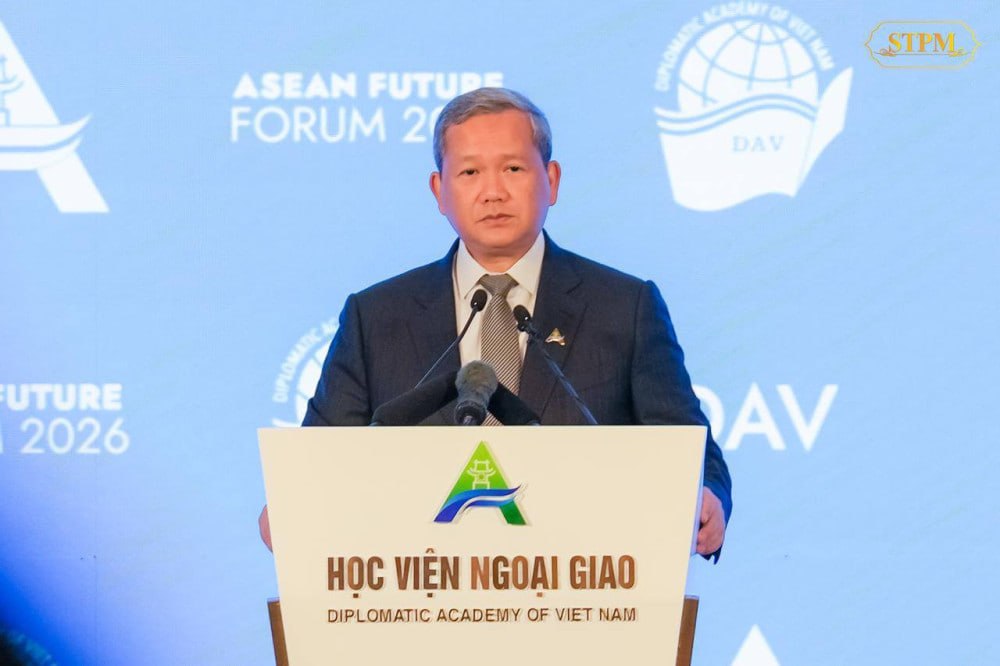
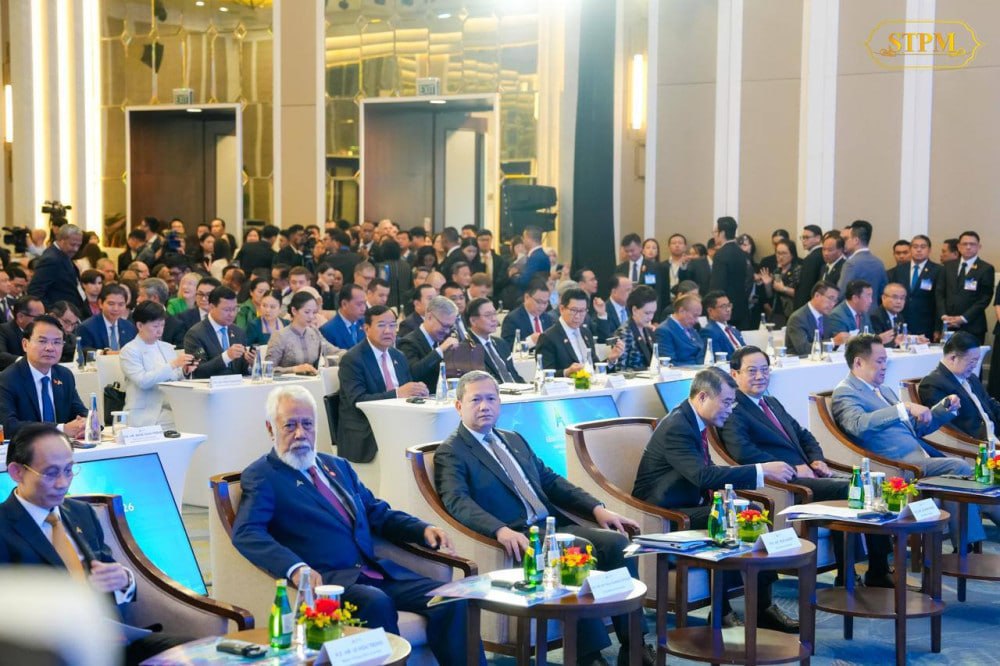
Cambodian Prime Minister Samdech Moha Borvor Thipadei Hun Manet underscored three key priorities – peace, economic cooperation, and people – during his address at the 3rd ASEAN Future Forum on June 9 in Hanoi, Viet Nam.
The Premier noted that, in a short period of time, the ASEAN Future Forum has become an important platform for candid, strategic, and forward-looking discussions on some of the most pressing issues facing the region and the world.
“This forum enables us to assess the challenges before us and explore practical pathways forward through dialogue, cooperation, and shared responsibility,” he said, adding that the theme of this year's forum, “Shaping Our Future Together: Peace, Prosperity, and People-Centred Development,” is both timely and necessary.
Reflecting on ASEAN’s journey, Samdech Thipadei Hun Manet recalled that Southeast Asia was once marked by conflict, mistrust, ideological divisions, and poverty. Through dialogue, confidence-building, respect for sovereignty, non-interference, and peaceful settlement of disputes, ASEAN has gradually transformed the region into one of the most stable and dynamic in the world.
“This transformation did not happen by chance. It was the result of deliberate choices by our leaders and peoples to choose dialogue over confrontation, cooperation over division, and shared progress over rivalry,” he stressed.
However, he warned that peace cannot be taken for granted. Around the world, armed conflicts and violence continue to cause devastating consequences, while modern conflicts increasingly transcend national borders and affect global stability.
The Prime Minister cited ongoing tensions in the Middle East as an example, noting that they have disrupted the movement of critical resources, particularly oil and gas, contributing to rising energy costs, higher food prices, supply chain disruptions, and uncertainty in global markets.
“The full consequences are still unfolding, but one thing is already clear: instability anywhere increasingly affects prosperity everywhere,” he said.
Addressing the border issue between Cambodia and Thailand, Samdech Thipadei Hun Manet said that the ceasefire between the two countries continues to hold, although it remains fragile.
“Cambodia remains concerned about the situation on the ground in the occupied areas located within Cambodian territory. Borders and sovereignty must never be altered by force or through a fait accompli,” he underlined.
Samdech Thipadei Hun Manet noted that both Cambodia and Thailand have expressed their commitment to a peaceful resolution and to transforming the current ceasefire into a lasting peace. Both sides continue to uphold the Joint Statement of Dec. 27, 2025.
Therefore, he stressed the need for the full, effective, and urgent implementation of the Joint Statement, particularly the point 3, which calls for the prompt resumption of survey and demarcation work by the Joint Boundary Commission (JBC) in accordance with existing agreements.
According to the Prime Minister, Cambodia continues to attach great importance to its relationship with Thailand, a close neighbour with a common commitment to peace, prosperity, and regional stability.
He emphasised that strict adherence to international law, existing treaties and agreements, as well as dialogue, good faith, and mutual respect, are essential to ensuring that sovereignty, territorial integrity, and international boundaries are respected.
These principles, he said, are necessary to restore trust, secure lasting peace, and enable displaced populations to return home safely and with dignity while rebuilding their livelihoods.
The Prime Minister also highlighted Cambodia’s recent decision to initiate compulsory conciliation under the United Nations Convention on the Law of the Sea (UNCLOS), describing it as a demonstration of Cambodia’s sincere commitment to pursuing a fair and lasting solution based on international law.
Thailand’s expressed preparations to engage in this UNCLOS-facilitated process, he added, is a welcome step toward the peaceful resolution of overlapping maritime claims, benefiting both countries and contributing to regional peace and stability.
“In this spirit, Cambodia sincerely appreciates the support of the international community, including ASEAN member states, for the ceasefire and the peaceful settlement of disputes between Cambodia and Thailand in accordance with international law and the principles of the UN Charter and ASEAN Charter,” he said.
Turning to economic issues, Samdech Thipadei Hun Manet observed that the world is currently facing multiple and overlapping crises, causing sustainable development to receive less attention on the international agenda.
Samdech Thipadei warned that some smaller states, which have relied heavily on peace, openness, international trade, and a rules-based international order to advance their development, are now facing significant challenges.
On the people dimension, Prime Minister stressed that all policies should ultimately serve the well-being of citizens.
“As we pursue growth, we must always remember that prosperity is meaningful only when it serves the people,” he said.
Samdech Thipadei stated that the true value of peace and prosperity lies in improving the lives, dignity, security, and opportunities of citizens.
“ASEAN’s achievements should not be measured solely by GDP, trade volumes, or investment flows. They should also be measured by whether our people live better, safer, healthier, and more hopeful lives,” he said.
The Prime Minister highlighted ASEAN’s contributions over recent decades in lifting millions out of poverty, expanding access to education and healthcare, improving connectivity, creating jobs, strengthening people-to-people exchanges, and supporting the growth of a regional middle class.
Nevertheless, he acknowledged that rising expectations and increasingly complex challenges require ASEAN to deliver more effectively for its people.
He stressed the need to strengthen ASEAN community-building efforts across all pillars and highlighted the importance of promoting mutual understanding among citizens of member states.
According to the Prime Minister, a lack of mutual understanding can weaken friendship, peaceful coexistence, good neighbourliness, and ASEAN’s sense of community.
Furthermore, mutual mistrust can create opportunities for narrow nationalism, populism, revisionism, and divisive narratives to gain influence at the expense of regional cohesion.
To address these challenges, Samdech Thipadei called for expanded youth and academic exchanges, cultural cooperation, economic engagement, media partnerships, and other forms of interaction to help current and future generations better understand one another.
By Heng Panha