KH
KH  FR
FR  AR
AR CN
CNNew Gecko Species Discovered in Cambodia’s Kirirom National Park
AKP Phnom Penh, February 25, 2026 --
The Ministry of Environment, in collaboration with conservation organisation Wild Earth Allies, has announced the discovery of a new species of bent-toed gecko in Cambodia’s Preah Suramarit-Kossamak Kirirom National Park.
The newly identified species, Cyrtodactylus kiriromensis sp. nov., was described following a long-term collaborative research effort involving Neang Thy, Cambodia Conservation Manager at Wild Earth Allies, Bryan L. Stuart of the North Carolina Museum of Natural Sciences, and L. Lee Grismer of La Sierra University. The findings were published in the scientific journal Zootaxa.
The discovery highlights the rich and still-unfolding biodiversity of the Cardamom Mountains, a region known for high levels of endemism.
“This discovery reminds us that Cambodia’s biodiversity is still far from fully documented,” said Neang Thy. “Even in well-known protected areas like Kirirom National Park, there are species waiting to be recognised. Continued field research is essential to understanding—and protecting—the country’s unique wildlife.”
The species was first encountered more than two decades ago during early field expeditions led by Bryan L. Stuart under the auspices of the Wildlife Conservation Society. At the time, it could not be formally described due to genetic complexity. Cyrtodactylus kiriromensis belongs to a group of bent-toed geckos previously believed to represent a single widespread species. Subsequent research has revealed the group to comprise multiple distinct, site-specific species distributed across the Cardamom Mountains.
Recent advances in genetic research enabled scientists to distinguish Cyrtodactylus kiriromensis from closely related species. Ecological observations indicate that the gecko inhabits semi-evergreen forest, where it is active at night on tree trunks, at the base of trees, on rock boulders near streams, and along forest trails.
The species is named after Kirirom National Park in Kampong Speu province, a protected area characterised by pine forest, semi-evergreen and evergreen forest, and bamboo stands. The park is managed by the Ministry of Environment and is a popular destination for visitors.
Stuart emphasised the role of museum collections in biodiversity research, noting that samples collected in 2000 were initially identified as part of a widespread species but later proved to represent a species unique to Kirirom National Park.
H.E. Khvay Atitya, Spokesperson for the Ministry of Environment, said the discovery underscores the importance of conserving green cover within protected areas, which are vital for biodiversity conservation, scientific research, and sustainable development.
He added that the Ministry continues to strengthen law enforcement, expand forest cover, and promote local community livelihoods to ensure protected areas remain critical habitats for wildlife, including vulnerable and critically endangered species, while also supporting ecotourism and environmental sustainability.
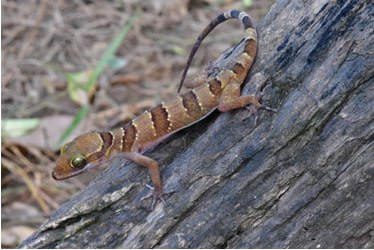
(Photo: Neang Thy, Wild Earth Allies)
By C. Nika