KH
KH  FR
FR  AR
AR CN
CNCambodia Removed from Arms-Embargo Country Group in Export Rules
AKP Phnom Penh, February 05, 2026 --
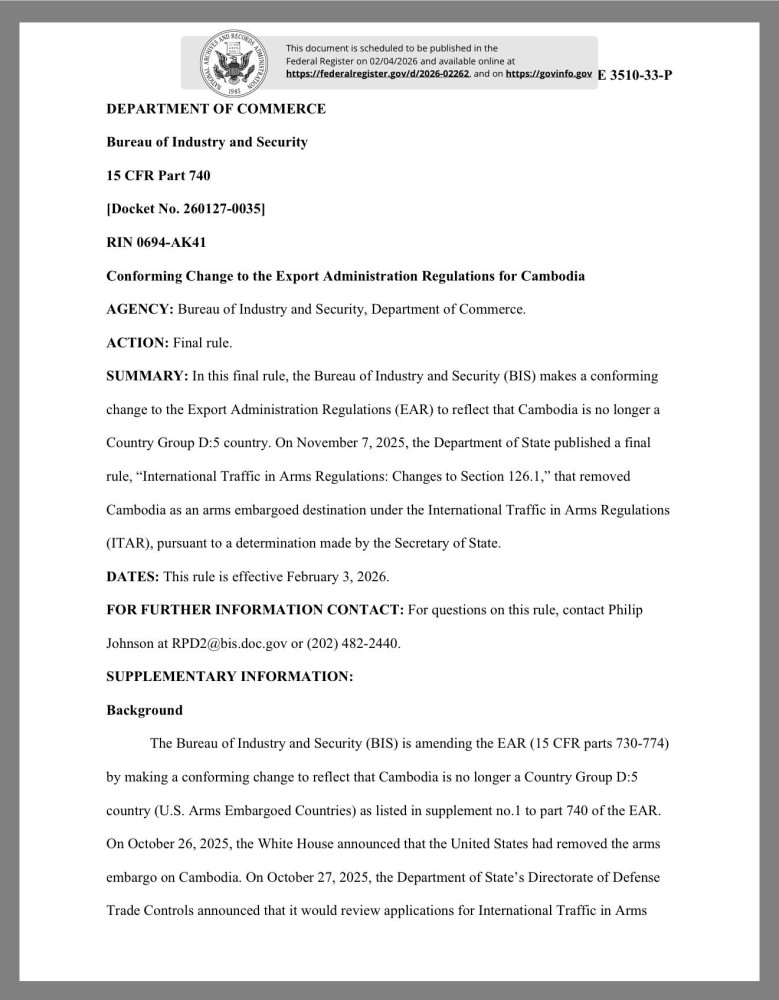
The United States has officially removed Cambodia from its list of arms-embargoed countries under the Export Administration Regulations (EAR), following a final rule issued by the U.S. Department of Commerce’s Bureau of Industry and Security (BIS).
This move marks a significant development in the Cambodia-U.S. relations, especially in the areas of defence, trade, and regulatory cooperation.
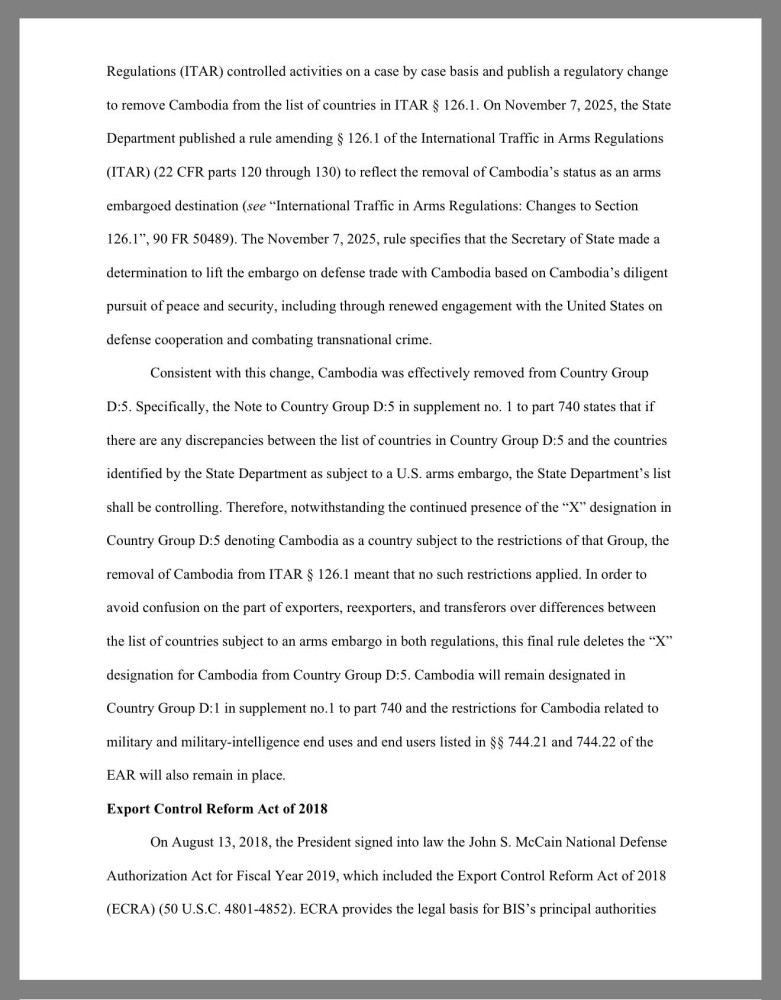
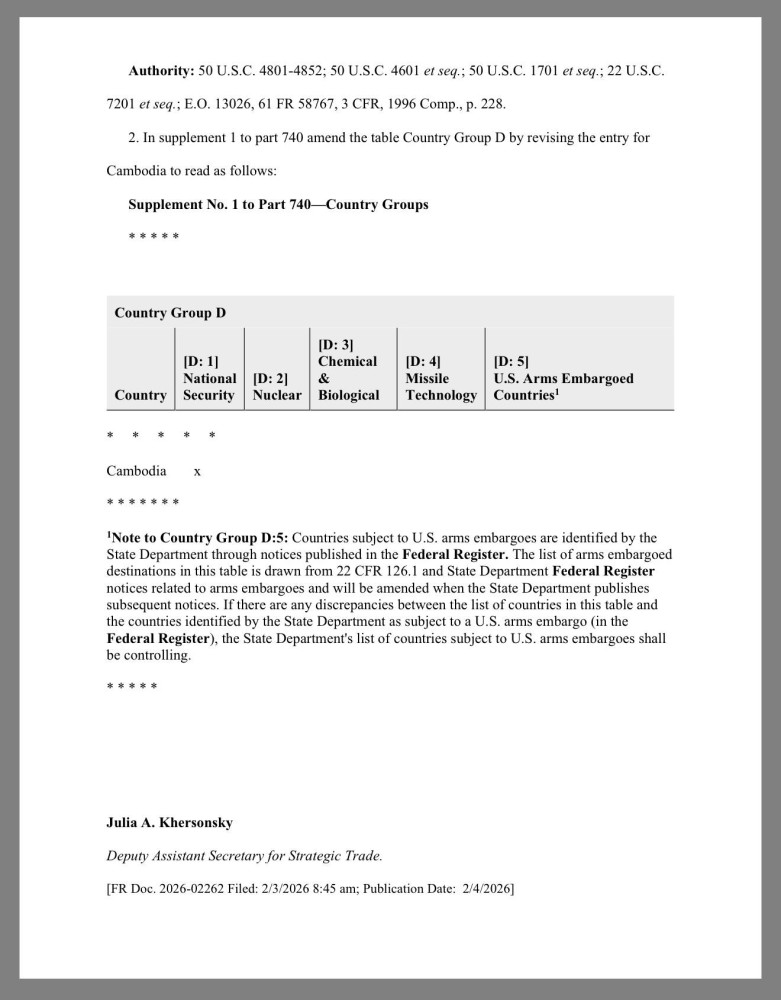
The rule, which took effect on Feb. 3, reflects an earlier decision by the U.S. Department of State to lift its arms embargo on Cambodia. As a result, Cambodia is no longer designated under Country Group D:5, which applies to countries subject to U.S. arms embargoes.
According to BIS, the change aligns the EAR with amendments made to the International Traffic in Arms Regulations (ITAR) on Nov. 7, 2025, when the State Department formally removed Cambodia from Section 126.1 of the ITAR. The State Department said the decision was based on Cambodia’s “diligent pursuit of peace and security,” including renewed engagement with the United States on defence cooperation and efforts to combat transnational crime.
The U.S. government had earlier announced the lifting of the arms embargo on Oct. 26, 2025. Although Cambodia’s removal from ITAR effectively eliminated D:5 restrictions, BIS said the regulatory update was necessary to avoid confusion among exporters and ensure consistency across U.S. export control regulations.
Under the new rule, Cambodia remains listed in Country Group D:1, meaning certain export controls still apply, particularly those related to military and military-intelligence end uses and end users under sections 744.21 and 744.22 of the EAR.
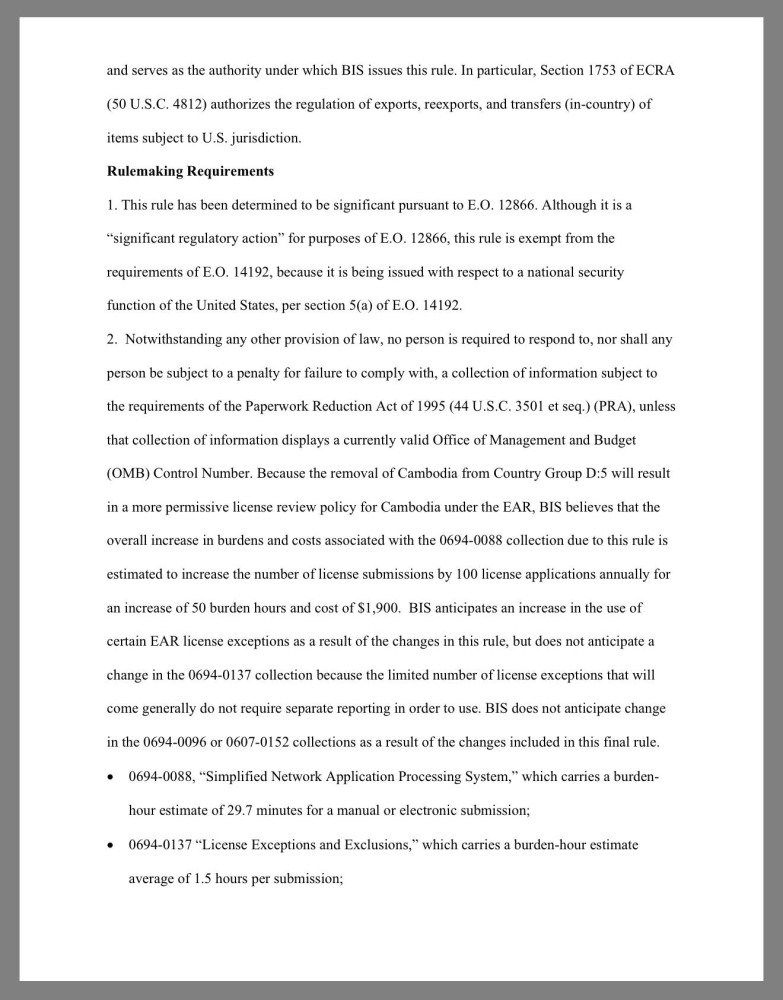
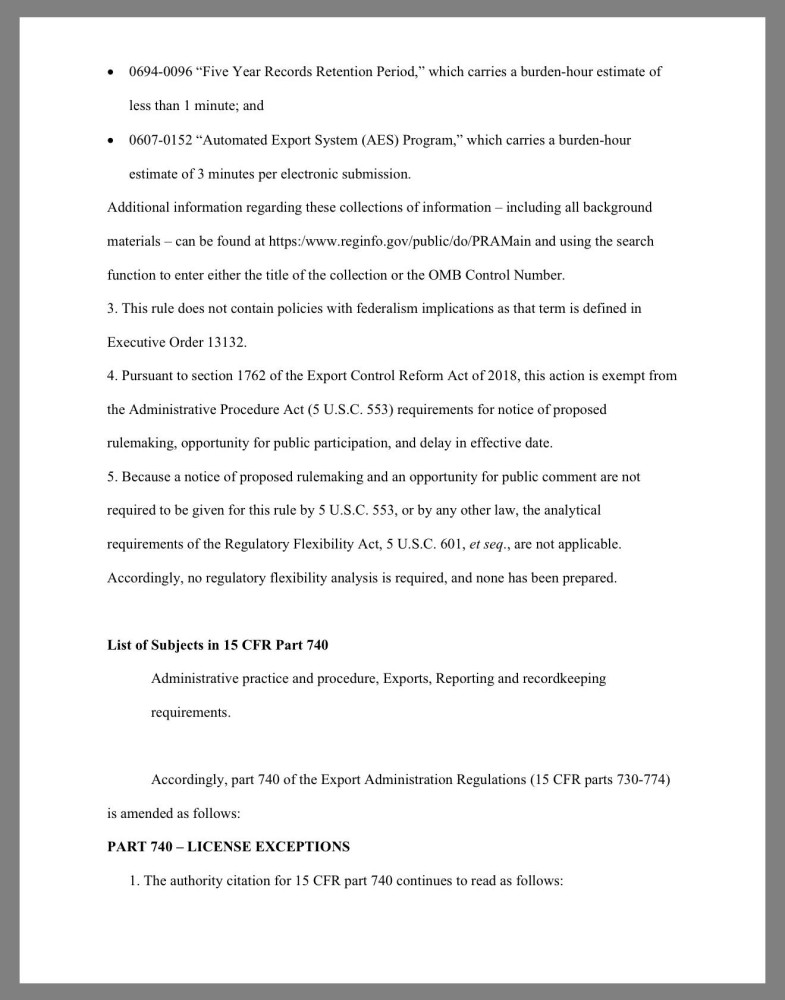
BIS noted that the regulatory change is expected to result in a more permissive license review policy for Cambodia and may lead to a modest increase in export licence applications. However, the rule does not alter existing national security safeguards and was issued under the authority of the Export Control Reform Act of 2018.
By C. Nika