KH
KH  FR
FR  AR
AR CN
CNCambodian Government Prioritises Displaced People While Defending Territorial Integrity
AKP Phnom Penh, February 02, 2026 --
The Royal Government of Cambodia continues to prioritise assistance for displaced citizens while actively safeguarding national sovereignty through diplomatic means, according to a government spokesperson.
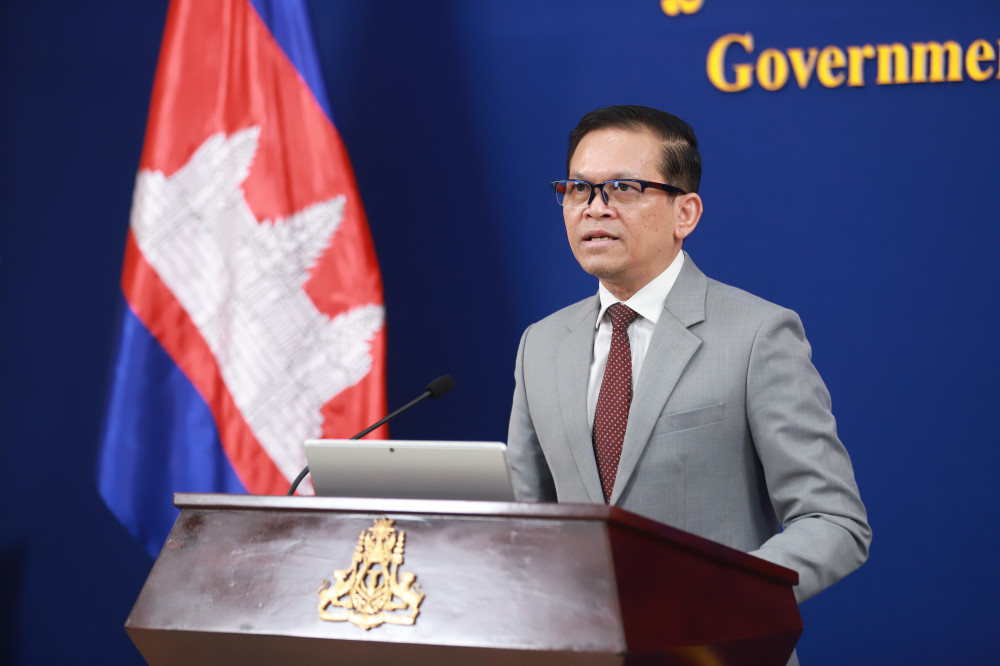
Speaking at a press briefing on the Cambodia-Thailand border situation on Monday, H.E. Pen Bona recalled Prime Minister Samdech Moha Borvor Thipadei Hun Manet’s visit on Jan. 31 to displaced families at three safety centres in Preah Vihear province –Wat Bak Kam, Wat Pothisal (Kilometre 8 Pagoda), and Wat Kampong Sangke – housing a total of 2,596 families.
The Prime Minister outlined three key measures: facilitating the safe return of displaced people through mine and unexploded ordnance clearance; strengthening and, where necessary, relocating temporary shelters for those yet unable to return; and assessing and rapidly restoring damaged public infrastructure using national and development partner resources.
The Prime Minister emphasised that the government’s two top priorities are protecting the nation’s territory and ensuring the safety of the people. The ongoing efforts clearly demonstrate the strong commitment of national leaders and authorities at all levels, particularly local authorities, in mobilising all mechanisms to provide protection, safety, and recovery for affected citizens.
Under the coordination of local authorities and relevant security forces, displaced people have been gradually returning home each day. According to the Ministry of Interior, more than 83 percent, or approximately 550,000 people, have already returned to their homes out of over 640,000 displaced persons. Meanwhile, 109,044 people remain in temporary shelters, including 57,159 women and 35,673 children.
The government spokesperson reaffirmed that Cambodia maintains an unwavering position in defending the Cambodia-Thailand international border as inherited from the Commission of Delimitation of the Boundary between Indo-China and Siam, in full respect of international law principles, the principle of intangibility of frontiers (Uti Possidetis Juris), the Franco-Siamese conventions and treaties, the maps, and the procès-verbaux of the Commission of the Abornement of the Boundary between Indo-China and Siam, as well as all relevant agreements and documents mutually agreed upon by both parties. Cambodia categorically rejects any alteration of the border resulting from the use of force.
By C. Nika