KH
KH  FR
FR  AR
AR CN
CNCambodia, Thailand Outlines Mechanisms for Effective Ceasefire Implementation
AKP Phnom Penh, December 27, 2025 --
To ensure the effective implementation of the ceasefire which comes into force at 12:00 hours noon (local time) on Dec. 27, 2025, both sides agree to utilise the Cambodia-Thailand and Thailand-Cambodia Border Coordination Units.
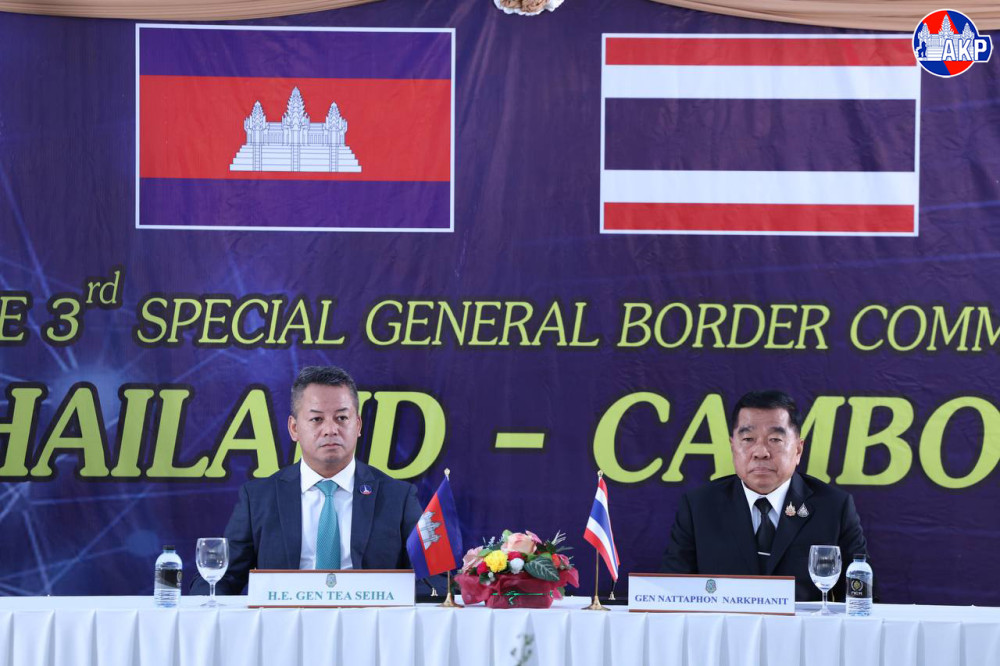
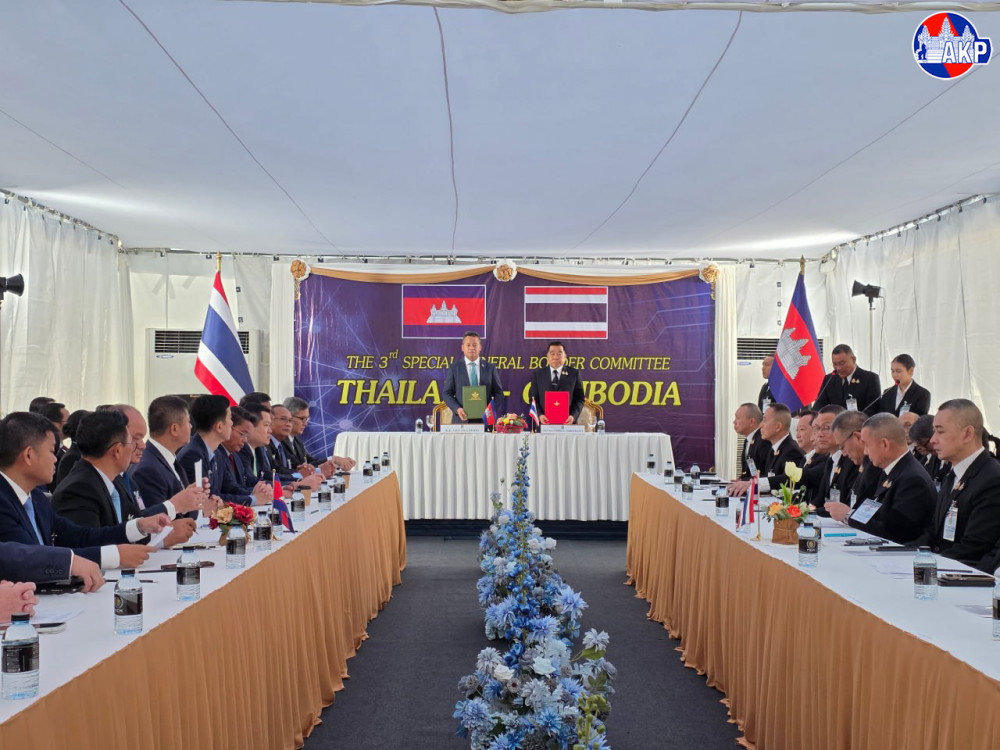
This mechanism will help sustain the ceasefire, manage situations on the ground, address incidents in a timely manner, and prevent miscalculation under the observation and verification of the ASEAN Observer Team (AOT), read the Joint Statement of the 3rd Special Cambodia-Thailand General Border Committee (GBC) Meeting, signed this morning by H.E. Gen. Tea Seiha, Cambodian Deputy Prime Minister and Minister of National Defence, and his Thai counterpart H.E. Gen. Nattaphon Narkphanit, at the Prom-Pak Kard Permanent Border Checkpoint, located between Pailin province of Cambodia and Chanthaburi province of Thailand, under the AOT observation.
According to the Joint Statement, both sides recognised the AOT’s important role and agreed to strengthen its functions, in consultation with both the ASEAN Chair and the AOT, in verifying and ensuring the effective implementation of all the measures in this Joint Statement.
The two parties will maintain regular and direct lines of communication between their Ministers of Defence and Chiefs of Defence Forces for prompt response to urgent situations that cannot be addressed at the local level. If required, high-level representatives from both sides will meet to effectively resolve any issues on the ground.
In addition, the Joint Coordinating Task Force (JCTF) on Humanitarian Demining will notify respective local authorities of its own side as well as the JCTF of another side to be aware of and to facilitate the Humanitarian Demining operations in the agreed priority border areas according to the Action Plans agreed by both sides for smooth operation without any obstructions or misunderstanding.
Furthermore, official media teams from both sides will maintain regular and direct communication to ensure the effective prevention and management of misinformation and disinformation. They will also ensure transparency and accuracy of news and reports to enhance mutual trust.
By C. Nika