KH
KH  FR
FR  AR
AR CN
CNCambodia Welcomes Return of Three Sacred Khmer Sculptures from Smithsonian's National Museum of Asian Art
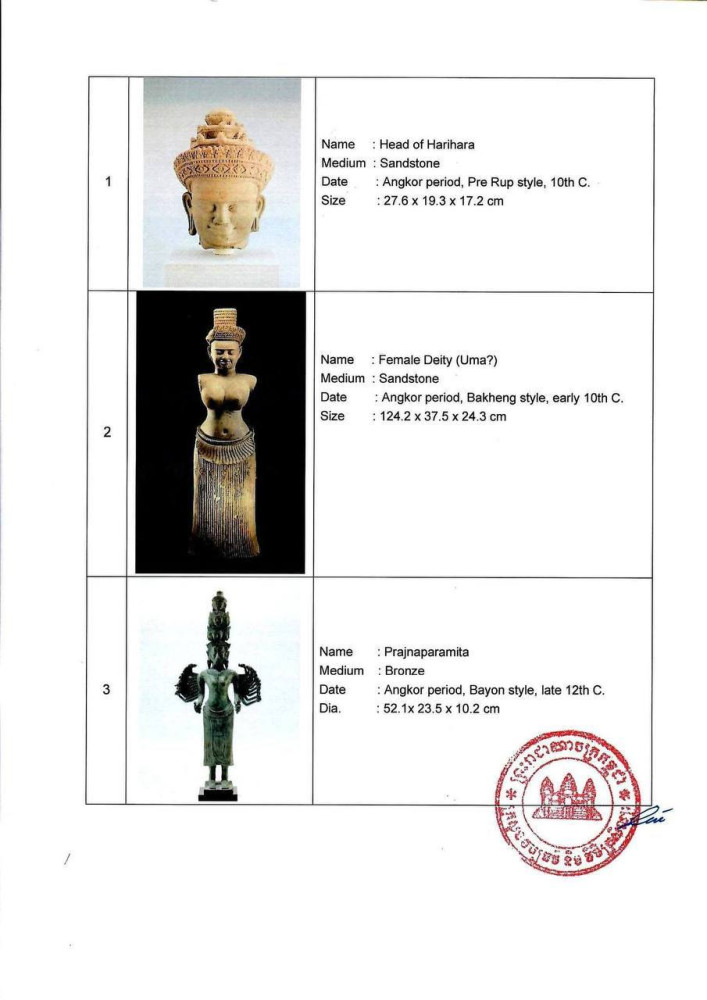
AKP Phnom Penh, December 17, 2025 -- Three treasured Khmer masterpieces to Cambodia: the Head of Harihara, 10th century, Female Deity (the Goddess Uma), 10th century, and Prajnaparamita, late 12th century, will be returned to Cambodia from Smithsonian's National Museum of Asian Art, the Ministry of Culture and Fine Arts announced this morning.
The return follows several years of discussions with the National Museum of Asian Art of the Smithsonian Institution and the Cambodian restitution team, said the Ministry, adding that the Smithsonian Institution's Board of Regents has formally approved the return on Oct. 27, 2025.
According to the Ministry, the return of these sacred sculptures is the result of an extensive provenance investigation, which concluded that the objects were removed from Cambodia during decades of civil war and insecurity that led to widespread looting. Their return represents a deeply meaningful step toward cultural restoration for the Cambodian people. It is the first repatriation carried out under the Smithsonian's Ethical Return Policy for the National Museum of Asian Art.
“Cambodia has consistently emphasised that the antiquities it is reclaiming, including these three masterpieces, are not merely extraordinary works of art – they are living embodiments of our ancestors' spirit and the identity of the Khmer people. They represent the Angkor Empire's timeless strength, devotion, and creativity. Their homecoming marks a moment of national reflection and healing for a country that has endured decades of conflict and cultural destruction,” H.E. Dr. Phoeurng Sackona, Minister of Culture and Fine Arts, stated.
The Minister continued, “We are deeply grateful for the Smithsonian's good-faith cooperation and the spirit of trust and partnership that made this return possible. We also hope that other museums will follow the leadership of the Smithsonian Institution in adopting and actively implementing a policy of ethical returns a policy which makes it easier for countries like Cambodia to recover sacred artefacts lost during war.”
H.E. Dr. Phoeurng Sackona thanked and praised the efforts of the National Museum of Asian Art, its Director Chase Robinson, and particularly his provenance and curatorial staff, who made this return possible, as well as the U.S. Embassy in Phnom Penh, the Ministry's team of archaeologists and researchers, and the National Museum for their support. She also extended special thanks to Bradley J. Gordon of Edenbridge Asia and Melina Antoniadis of NOSTOS Strategies for assisting in the negotiations for this historic return.
By C. Nika