KH
KH  FR
FR  AR
AR CN
CNCambodian-Japanese Research Unveils Key Findings on Mekong Freshwater Pufferfish Toxicity
AKP Phnom Penh, November 14, 2025 -- A collaborative research effort between Kratie University and prominent Japanese institutions has shed new light on the critical public health challenge posed by freshwater pufferfish in Cambodia's Mekong River basin.
The joint research, co-published in several leading international journals, involves experts from Nagasaki University, Nifrel Osaka Aquarium, Fukushima Medical University, and Kyoto University School of Public Health.
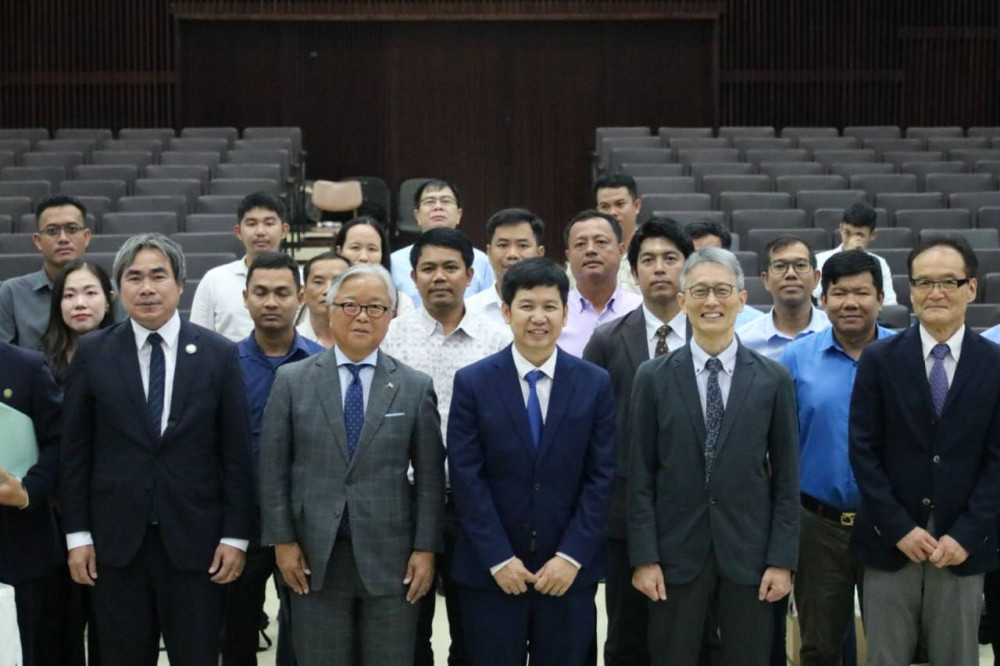
The findings were presented at a scientific conference held on Nov. 13, 2025, at the Institute of Technology of Cambodia (ITC).
Titled "Current and Future Perspectives of Freshwater Pufferfish Research in Cambodia," the conference was co-organised by Kratie University and Nagasaki University to present scientific findings and raise public awareness regarding food safety, nutrition, and public health risks associated with the fish.
The event saw high-level attendance, including H.E. UENO Atsushi, Ambassador of Japan to Cambodia, and H.E. Dr. Hong Kimcheang, Under Secretary of State at the Ministry of Education, Youth and Sports.
H.E. Ngy Laymithona, Rector of Kratie University, emphasised that the presentations by renowned Japanese researchers reflect the strong international cooperation essential for tackling toxicity issues caused by pufferfish in the region.
The project, funded by the Japan Society for the Promotion of Science (JSPS), focuses on four main areas:
1. Toxin Variation: Investigating the causes and mechanisms of toxin level fluctuations.
2. Toxin Acquisition: Tracing how the fish accumulate toxins from their environment.
3. Consumption Habits: Understanding why the local population continues to consume the high-risk fish.
4. Food Safety: Exploring methods to potentially render freshwater pufferfish safe for human consumption.
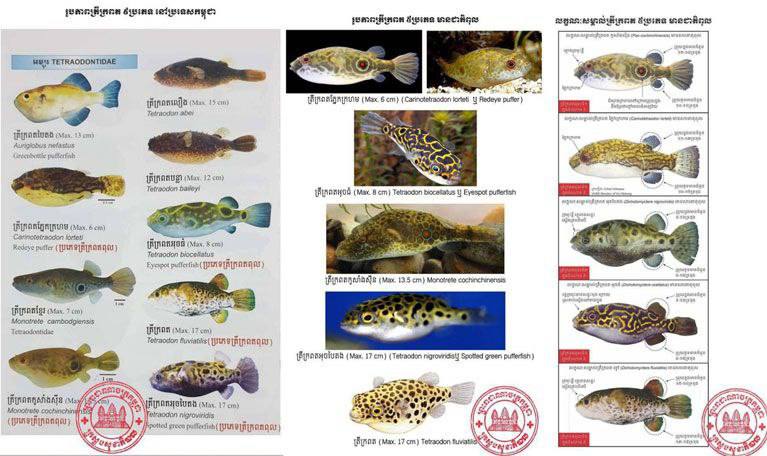
Professor Minoru Wada, a key researcher, presented detailed results on species identification of pufferfish samples collected from Kratie province. The analysis combined morphological characteristics with mitochondrial DNA (mtDNA) sequencing of 36 samples, classifying them into two distinct groups:
• Pao sp. A: Distinguished by a short snout, this group was found to contain high toxin levels.
• Pao sp. B: Identified by a longer snout with spines, this group demonstrated significantly lower toxin levels.
Professor Wada stressed that pufferfish are not inherently toxin-producing. The toxins, such as saxitoxins (STXs), are exogenous and accumulate in the fish's body through the food chain after they consume bacteria, cyanobacteria, and other aquatic organisms.
He concluded that future research must focus on establishing a precise link between the dietary sources and the resulting toxin accumulation in each specific fish species.

By K. Rithy Reak