KH
KH  FR
FR  AR
AR CN
CNOver 800 Japanese and Cambodian Volunteers Plant 10,000 Trees in Angkor Park
AKP Phnom Penh, July 05, 2025 --
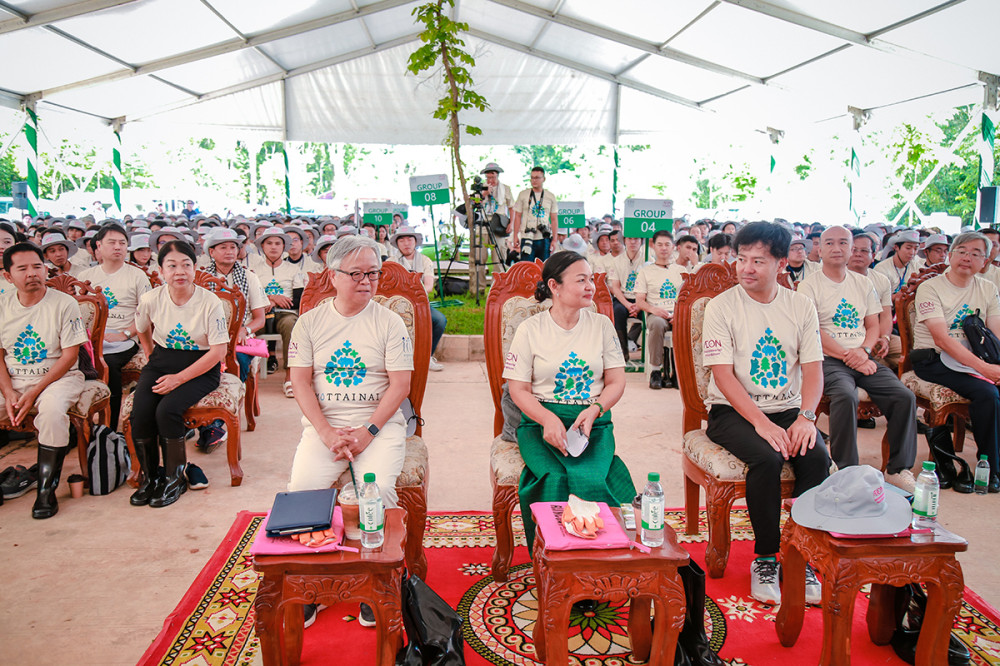
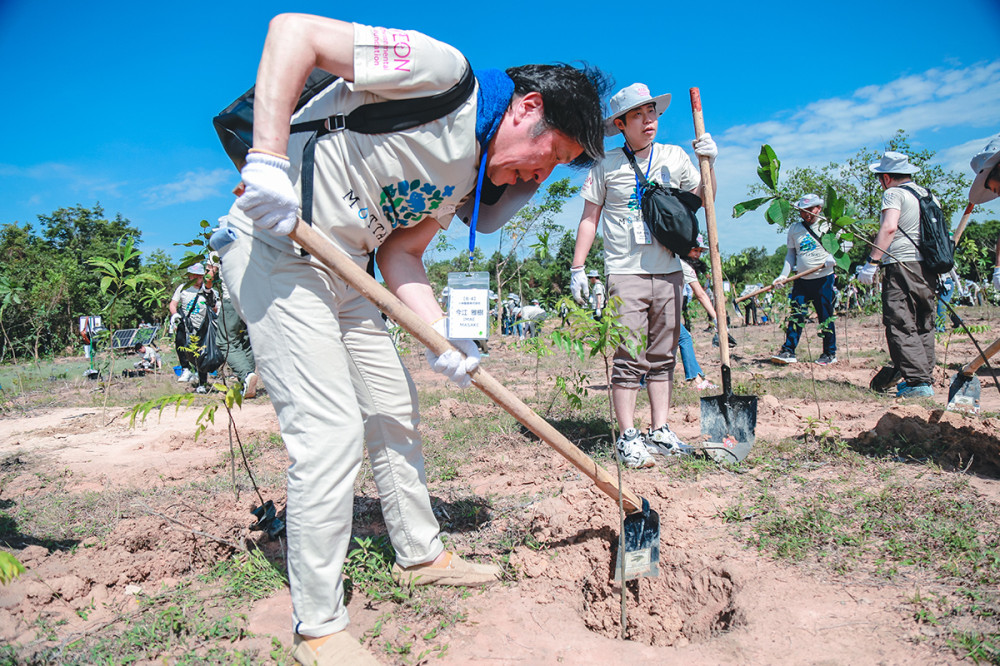
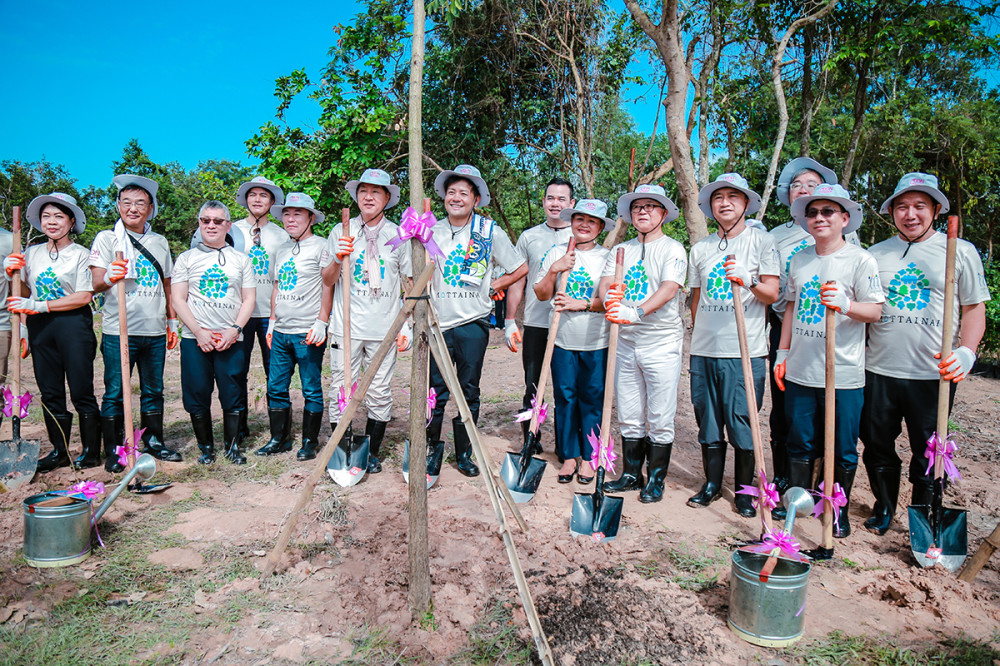
More than 800 volunteers from Japan and Cambodia came together on July 5 to plant 10,000 tree saplings across five hectares, east of Prey Temple in the Angkor Archaeological Park.
The large-scale tree-planting event was a collaborative effort between Japan's AEON Environmental Foundation and the APSARA National Authority.
Of the 800 volunteers, 450 were Japanese nationals and 350 were Cambodian.
Noya Okada, a Board Member of the AEON Environmental Foundation, explained that the foundation has been dedicated to tree-planting initiatives since 2002. These efforts aim to protect Cambodia's heritage sites from erosion and promote biodiversity conservation.
To date, the foundation's initiatives have seen over 4,200 volunteers plant more than 34,000 trees in various locations, including along roads to Angkor Wat, around temple complexes within the Siem Reap forest park, and near the Preah Norodom Sihanouk-Angkor Museum, Phnom Tamao Zoological Park, and the Wildlife Rescue Centre in Takeo province.
Across Cambodia, the foundation has now planted a total of 64,409 trees with the participation of 8,692 volunteers.
Japanese Ambassador to Cambodia, H.E. Ueno Atsushi, highlighted AEON's long-standing commitment to Cambodia. He noted that beyond significant investments that boost the economy and create jobs, AEON actively contributes to social initiatives, particularly in environmental protection and heritage conservation.
The Ambassador specifically mentioned the foundation's crucial role in constructing the Preah Norodom Sihanouk-Angkor Museum in Siem Reap, which serves to preserve and display ancient artifacts from the Angkor region. He reaffirmed Japan's ongoing commitment to strengthening cooperation with Cambodia, further enhancing the strong bilateral friendship.
H.E. Mrs. Lundi Sannara, Secretary of State at the Ministry of Culture and Fine Arts, underscored the vital importance of trees, stating, "trees are life." She emphasised that trees are essential for water sources, biodiversity, and a clean environment.
In the Angkor area, trees play a critical role by attracting rain, maintaining groundwater levels, absorbing carbon dioxide, producing oxygen, and providing shade for both visitors and wildlife. Furthermore, trees help protect Cambodia’s ancient temples, many of which are built on sandy soil and rely on stable groundwater and rain to sustain the reservoirs and moats that support their structures and prevent collapse.
Trees also serve as natural barriers against climate change, the erosion of temple stones, storms, and flooding.
Over the past two decades, the APSARA National Authority, in partnership with various organisations, has planted over two million trees within Angkor Park, demonstrating a sustained commitment to preserving the site's environment and heritage.
Article in Khmer by Khuth Sao
Article in English by K. Rithy Reak