KH
KH  FR
FR  AR
AR CN
CNOpinion: Enhancing Food Security Amid Global Supply Chain Disruptions
AKP Phnom Penh, June 18, 2025 --
Since the United Nations enshrined the right to adequate food in 1976, food security has remained a central tenet of global development policy.
Yet, this ideal remains elusive for over 800 million people worldwide.
The global food system, once hailed for its efficiency, is under mounting pressure from climate change, geopolitical tensions, volatile markets, and fractured supply chains.
Enhancing food security in such a disrupted context demands more than technical fixes—it requires systemic reform, cross-sectoral cooperation, multi-stakeholder partnership, and inclusive policymaking.
Food security, as defined by the United Nations Committee on World Food Security, is not just about the availability of food. It encompasses physical, social, and economic access to sufficient, safe, and nutritious food that meets dietary preferences and sustains a healthy life.
This broad definition underscores the complexity of food insecurity, which arises from interlinked problems of accessibility, affordability, stability, and utilisation. Solving it, therefore, demands integrated solutions.
Climate and Conflict: The Dual Threats
Climate change is a force multiplier in the food crisis.
Rising temperatures, erratic rainfall, and extreme weather events disrupt crop cycles, degrade soil health, and reduce yields.
According to empirical evidence, global warming has already reduced maize and wheat yields by nearly 4–6 percent.
But climate is not the only disruptor. Conflicts and political instability, often exacerbated by resource scarcity, displace populations and dismantle local food systems.
In turn, this instability contributes to global food price volatility, further causing burden to low-income households.
The Problem of Low Productivity and Marginalisation
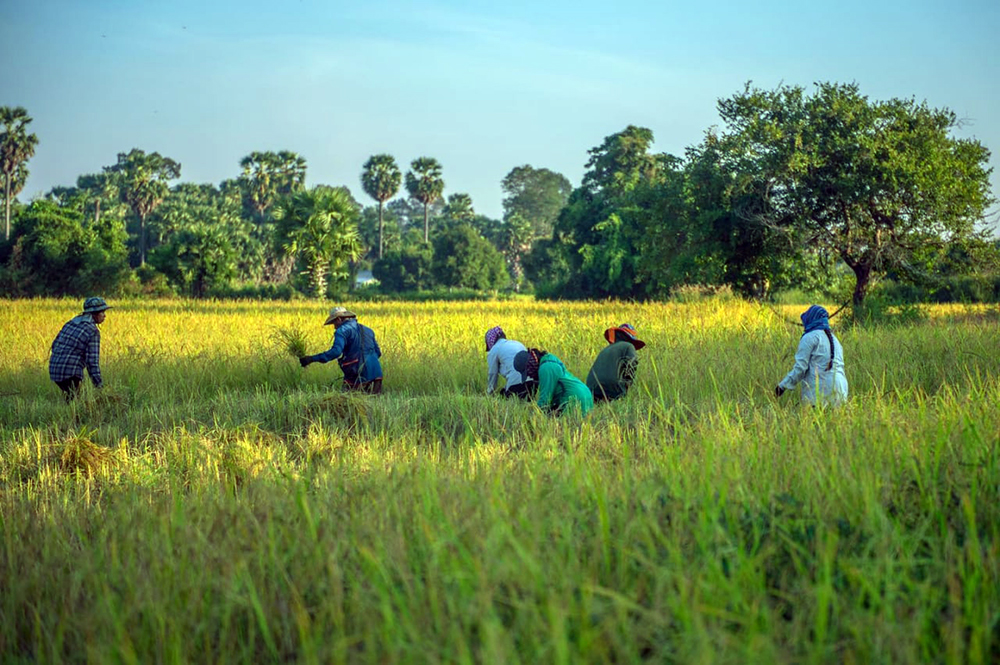
In many developing countries, food insecurity is rooted in low agricultural productivity.
Smallholder farmers, who constitute the majority of the rural poor, often lack access to quality inputs, secure land tenure, extension services, and financial tools.
Low yields translate to insufficient income and dietary gaps. Moreover, water scarcity, rapid urbanization, and land degradation further erode productive capacity, creating a vicious cycle of poverty and hunger.
Urbanisation also siphons labour from agriculture, eroding rural resilience and knowledge systems.
Household size also plays a role. Larger households face higher food needs, but without proportionate increases in productivity or income, they risk deepening food insecurity.
Policies must thus account for household demographics and ensure access to land, labour-saving technologies, and targeted social safety nets.
Rethinking Agriculture: From Productivity to Sustainability
Boosting productivity is essential, but not at the expense of environmental sustainability.
The future of food lies in agroecological and regenerative practices that improve yields while preserving the quality of soil and water.
Conservation agriculture, organic farming, crop rotation, and precision feeding in livestock systems are examples of such approaches.
For example, planting pasture legumes like lablab or mucuna enhances nitrogen fixation, improving both soil health and livestock nutrition.
Equally critical is the transition from extractive monocultures to diversified farming systems that integrate crops, livestock, and agroforestry.
These systems are more resilient to shocks and support broader ecosystem services.
Local authorities must support this transition by investing in infrastructure, facilitating access to land, and strengthening local ecological governance.
The Role of Farmers and Education
A common misconception is that traditional farmers have little to offer in the face of modern agricultural challenges.
In reality, their indigenous knowledge and adaptive practices are invaluable. Bottom-up planning that involves farmers in policy design ensures that interventions are relevant and context-specific.
Empowering farmers through education and capacity building—particularly in nutrition, climate-smart agriculture, and market access—is indispensable.
Agricultural extension systems must be revitalized using participatory approaches such as farmer field schools.
Education also provides pathways to off-farm employment, a crucial safety net for rural households vulnerable to climate and market shocks.
Trade, Technology, and Fair Policies
Global trade plays a critical role in food security by bridging supply gaps, especially for countries with insufficient arable land.
Yet, current trade policies are marred by distortions. Protectionist tariffs, export restrictions, and heavy subsidies in developed countries depress global prices and discourage production in developing nations.
It is imperative to urgently reform rules on subsidies and market price support, while ensuring safeguards for low-income food-importing countries.
Moreover, developing countries must invest in adaptive technologies and resilient infrastructure.
Innovations in drought-tolerant seeds, smart irrigation, and digital platforms for market access can revolutionize smallholder productivity.
However, these technologies must be tailored to local needs and accompanied by credit, insurance, and land reform policies to ensure equitable access.
A Call for Integrated Action
Enhancing food security in today’s disrupted world demands a holistic approach.
Policymakers must recognise the interdependence of food systems with climate, conflict, health, education, and trade.
Integrated national strategies should promote local economic development, restore degraded ecosystems, and build resilience among the most vulnerable.
Governments, international organisations, and the private sector must align efforts to build inclusive, sustainable, and equitable food systems.
Trade negotiations should prioritise food security over political gains. Meanwhile, investment in research, especially in neglected crops like millet and sorghum, is vital for long-term resilience.
As the world grapples with multiple crises, food security should be treated not just as a humanitarian imperative, but as a strategic priority for global peace and stability.
The pathway forward lies not in isolationist or protectionist policies, but in humanity, cooperation, innovation, justice and equity.
By Chheang Vananrith
Chairman of the National Assembly Advisory Council
(The views here are his own.)