KH
KH  FR
FR  AR
AR CN
CNCOMMENTARY: Cambodia-Vietnam Relations in the New Era: Strengthening Ties Amid Great Power Rivalries
AKP Phnom Penh, April 30, 2025 --
This year marks the 58th anniversary of Cambodia-Vietnam relations and the 50th anniversary of Vietnam’s reunification. It is a well-timed opportunity to reflect on the evolution of Cambodia-Vietnam relations. In the post-conflict era, both nations have reconstructed their domestic institutions while simultaneously cultivating a bilateral relationship founded on historical solidarity, regional integration, and a deepening and more refined commitment to the principles of sovereignty and peaceful coexistence.
Nevertheless, the contemporary bilateral relationship between Cambodia and Vietnam confronts emergent challenges stemming not from internal dynamics but rather from the evolving landscape of international relations. Specifically, the potential resurgence of Donald Trump to the U.S. presidency and the escalating strategic competition between the United States and China are fundamentally reshaping the global and regional geopolitical architecture. Within this evolving context, it becomes imperative for Cambodia and Vietnam to reaffirm their dedication to peaceful coexistence and mutual respect for territorial integrity as foundational principles underpinning their bilateral engagement.
Cambodia-Vietnam relations have been deeply influenced by their interwoven historical experiences. Vietnam’s military intervention in 1979, which precipitated the fall of the Khmer Rouge’s genocidal regime, stands as a pivotal moment in the political and social transformation of both states. Over the ensuing decades, the two countries have gradually moved beyond historical antagonisms and mutual distrust, developing a bilateral framework grounded in pragmatic cooperation and aligned strategic and economic interests. This trajectory illustrates a deliberate shift toward converging developmental objectives within the broader regional landscape.
Solidarity continues to serve as a foundational pillar of Cambodia–Vietnam relations. Both countries have consistently affirmed their mutual support for each other’s sovereignty, political stability, and national development trajectories. Cambodia has acknowledged Vietnam’s critical role in ending the genocidal Khmer Rouge regime, recognising it as a turning point in its modern history. Likewise, Vietnam has expressed appreciation for Cambodia’s contributions during Vietnam’s struggle for national reunification, underscoring the reciprocal nature of their historical support. This enduring mutual recognition reinforces a relationship rooted in shared sacrifices and long-standing regional partnership.
This foundational solidarity has transcended its historical origins, evolving into substantive cooperation across a spectrum of sectors, encompassing political discourse, economic activity, defence collaboration, and cultural exchange. Tangible manifestations of the burgeoning trust between the two nations include expanding bilateral trade volumes, the formalisation of border demarcation agreements, and, notably, high-level diplomatic exchanges between the governments and ruling parties of both countries.
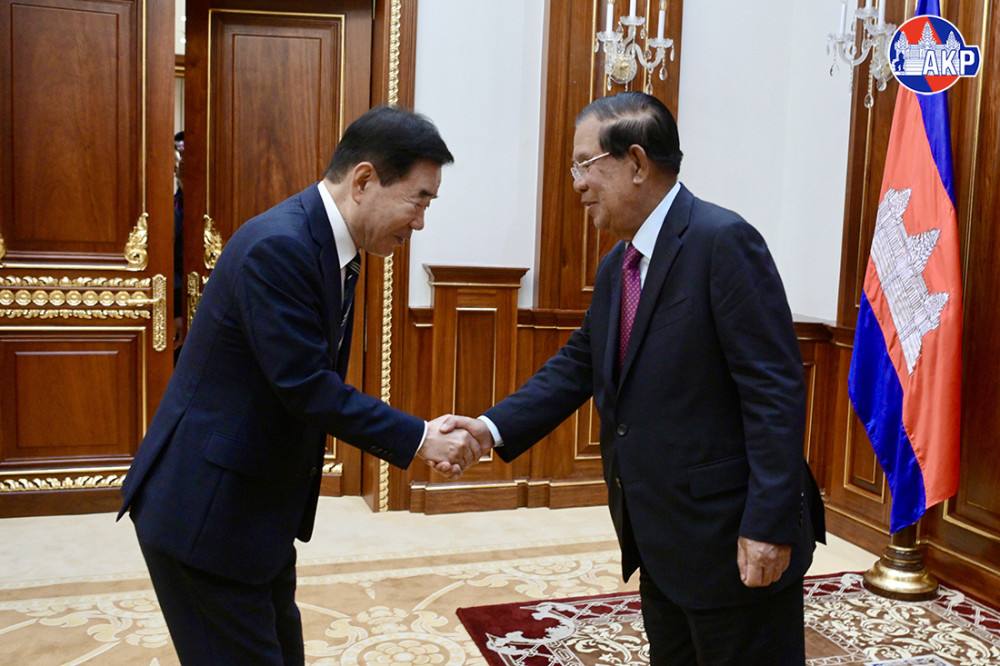
Illustratively, the high-level meetings on February 21 and April 29, 2025, between Cambodian People’s Party President Samdech Techo Hun Sen and Communist Party of Vietnam General Secretary Mr. To Lam in Ho Chi Minh City exemplified the depth of Cambodia-Vietnam diplomatic exchanges. These engagements reaffirmed strategic ties, enhanced political cooperation and mutual support, and promoted good neighbourliness, traditional friendship, and sustainable, long-term cooperation, especially significant amid the 50th anniversary of Vietnam’s reunification and shifting regional dynamics.
Cambodia and Vietnam share deep historical ties and increasingly converge on key regional and global issues. Both advocate for ASEAN centrality and a rules-based international order. Globally, they uphold principles of multilateralism, non-interference, and peaceful conflict resolution. Amid intensifying U.S.–China rivalry, both countries prioritise regional stability, dialogue, and strategic autonomy over alignment with competing blocs, reflecting a shared commitment to maintaining equilibrium in an evolving geopolitical landscape. Such shared views strengthen their coordination not only bilaterally but also in regional platforms like ASEAN, ASEAN+ mechanisms, and even at broader forums such as the United Nations.
Moving forward, the foundational Five Principles of Peaceful Coexistence – encompassing mutual respect for sovereignty and territorial integrity, mutual non-aggression, non-interference in internal affairs, equality and mutual benefit, and peaceful coexistence – must serve as the pragmatic bedrock of Cambodia-Vietnam bilateral relations. For instance, upholding mutual respect for territorial integrity necessitates the peaceful resolution of border issues through dialogue and legal frameworks, precluding unilateral actions that could erode trust. Similarly, the principle of non-interference mandates that each nation's domestic political evolution be regarded as a sovereign affair, free from external manipulation or pressure.
Adherence to the principles of equality and mutual benefit serves as a cornerstone for fostering equitable, sustainable, and transparent cooperation in trade and investment between Cambodia and Vietnam. In the security domain, enhanced collaboration to combat transnational challenges, such as human trafficking, narcotics smuggling, and cybercrime, can be pursued within a framework that respects national sovereignty and legal jurisdictions. Upholding these normative commitments not only reinforces the bilateral partnership but also provides a stabilising mechanism to mitigate the impact of external geopolitical pressures and internal socio-political dynamics that may otherwise strain the relationship.
Amid growing global uncertainty and the potential return of a more transactional U.S. foreign policy under a second Trump administration, characterised by diminished multilateralism and intensified U.S.–China rivalry, Cambodia and Vietnam face increasingly complex strategic choices. In this context, strategic autonomy should guide their bilateral engagement, allowing both nations to maintain balanced relations with major powers while prioritising national interests, regional stability, and an independent, non-aligned foreign policy trajectory.
Maintaining strategic autonomy requires that Cambodia and Vietnam remain attentive to each other’s strategic concerns and provide mutual reassurance. Perceptions of dominance, imbalance, or infringements on sovereignty could rekindle historical sensitivities and erode trust. A relationship grounded in equality, mutual respect, and confidence-building is crucial for navigating both internal challenges and external pressures. Simultaneously, both countries must remain vigilant to the dangers of great power rivalry unfolding in their immediate region. In coordination with ASEAN, they should resist pressures to align with any single bloc, instead promoting a regional order rooted in peace, inclusivity, and cooperative engagement.
As Cambodia and Vietnam mark the 58th anniversary of diplomatic relations, alongside Vietnam’s 50th reunification milestone and Cambodia’s continued progress in national development, both nations must reaffirm the interdependence of their futures. Their bilateral relationship, shaped by a shared past and aimed toward a common future, should be anchored in the principles of peaceful coexistence, respect for territorial integrity, enduring solidarity, and a collective vision for regional peace and stability. Amid intensifying great power rivalry and global uncertainty, Cambodia and Vietnam have the opportunity to demonstrate how neighbouring countries with a complex history can collaborate to advance peace, resilience, and prosperity. By upholding strategic autonomy and shared values, their partnership can not only endure but also serve as a pillar of stability in Southeast Asia.
By Kin Phea, PhD
Director General of the International Relations Institute of Cambodia, Royal Academy of Cambodia
(The views here are his own.)