KH
 FR
 AR
 CN
Cambodia’s 2027 National Budget Targets 4.8% Economic Growth
AKP Phnom Penh, October 23, 2026 --
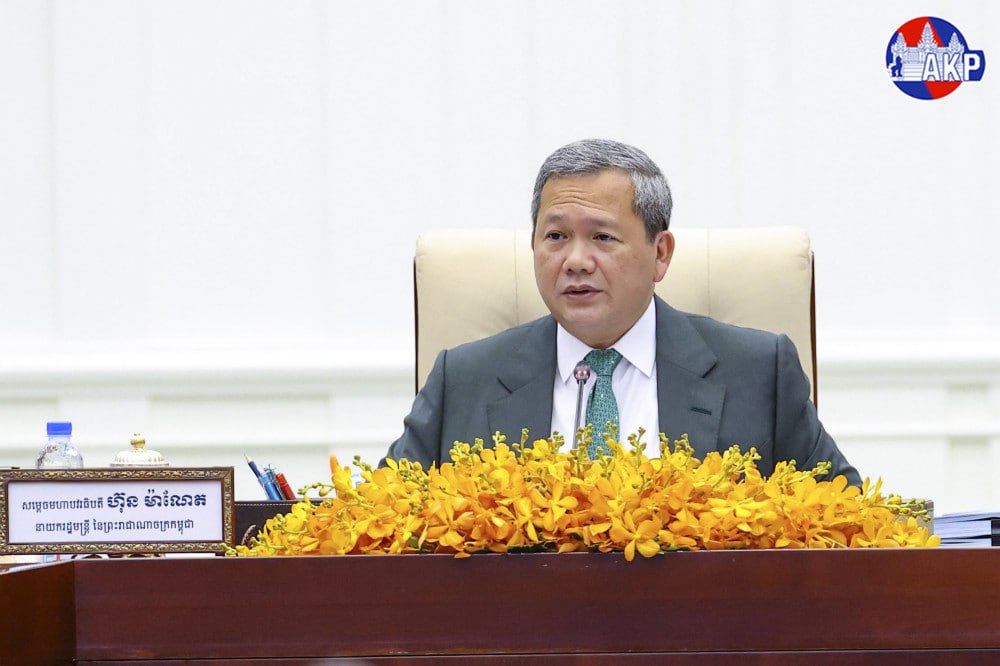
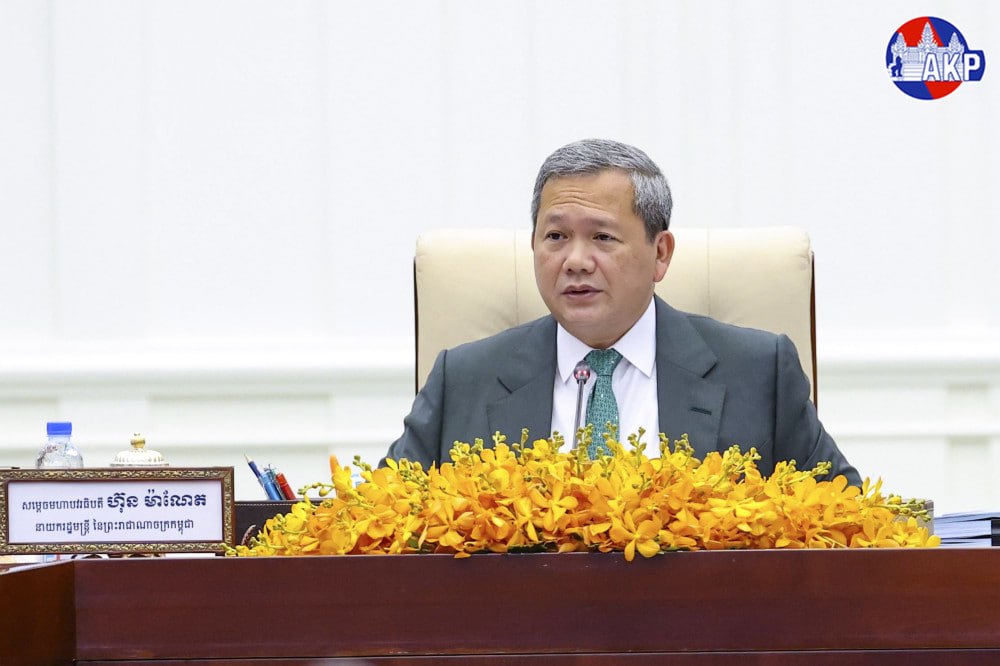
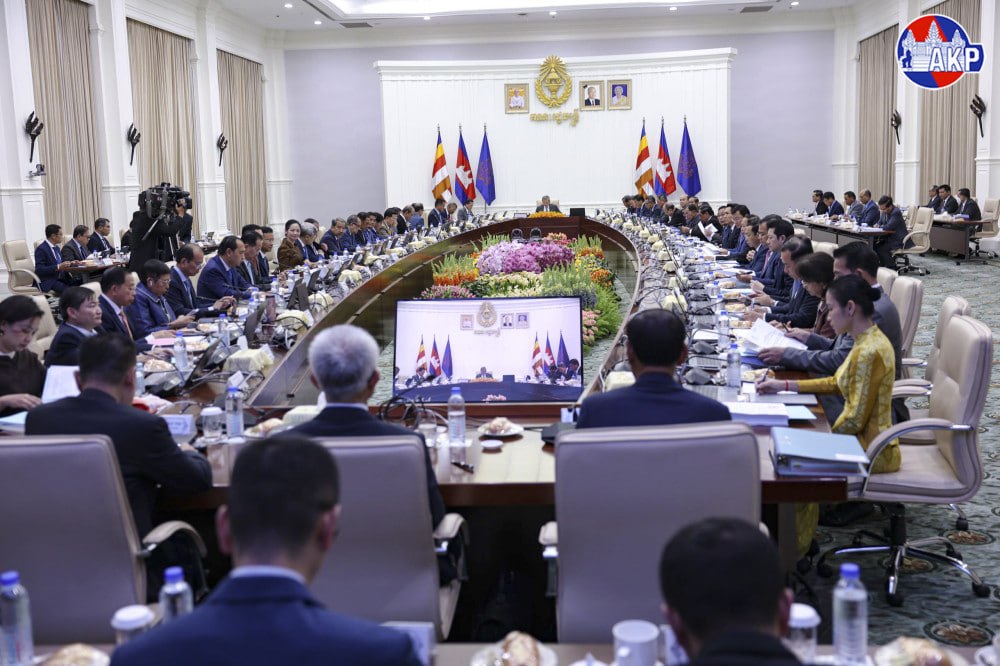
Cambodia’s 2027 draft national budget was approved by the Council of Ministers this morning, aiming to safeguard national sovereignty and territorial integrity, maintain stability, protect people’s livelihoods and support targeted economic growth amid heightened global uncertainty, while ensuring adequate response capacity and sustainable public finances, according to a press release received by AKP this afternoon.
Total expenditure under the 2027 national budget is set at KHR 39,700 billion, equivalent to 16.57 percent of gross domestic product (GDP), representing an increase of 3.2 percent compared with the 2026 Financial Management Law.
Meanwhile, expenditure for sub-national administrations is projected at KHR 5,068 billion, accounting for 11.9 percent of total state budget expenditure, or 2.12 percent of GDP.
On the revenue side, the Royal Government expects total national budget revenue to reach KHR 32,327 billion, equivalent to 13.49 percent of GDP and marking an increase of 6.7 percent compared with the 2026 Financial Management Law.
Revenue for sub-national administrations is estimated at KHR 2,819 billion, representing 8 percent of total state budget revenue, or 1.18 percent of GDP.
The 2027 budget is designed to protect national sovereignty and territorial integrity, maintain stability, safeguard people’s livelihoods and support targeted economic growth amid heightened uncertainty, while ensuring adequate response capacity and the sustainability of public finances.
Under this framework, Cambodia’s economy is projected to grow by approximately 4.0 percent in 2026 before accelerating to 4.8 percent in 2027. GDP per capita is expected to rise to US$3,277 in 2027, up from approximately US$3,098 in 2026.
Economic growth in 2027 is expected to be driven by three key sectors: industry, services and agriculture.
In the industrial sector, growth is projected to be supported by garment manufacturing, non-garment manufacturing, food and beverage production, and tobacco manufacturing. The services sector is expected to benefit from expansion in hospitality and food services, wholesale and retail trade, transport and storage, as well as information technology and telecommunications. Meanwhile, the agricultural sector is expected to receive support from crop production, livestock farming and fisheries.
The national budget reflects the Royal Government’s efforts to maintain macroeconomic stability, protect people’s livelihoods and sustain economic growth while preserving fiscal sustainability in an increasingly uncertain global environment.
By Heng Panha