KH
KH  FR
FR  AR
AR CN
CNAPSARA Authority Issues Rainy Season Safety Guidelines for Visitors to Angkor Heritage Site
AKP Phnom Penh, May 12, 2026 --
The APSARA National Authority has issued a public notice outlining safety and preventive measures for tourists and the public visiting the Angkor Archaeological Park during the rainy season.
The announcement dated May 11 was addressed to tourism associations, tour operators, tourist transport drivers, tour guides, domestic and international visitors, and the public, with the aim of ensuring visitor safety and preserving a pleasant travel experience at the UNESCO World Heritage site.
According to the APSARA Authority, the measures are intended to prevent accidents and minimise risks associated with heavy rain, strong winds, slippery surfaces, and other seasonal hazards within the Angkor complex.
Visitors were advised to avoid parking vehicles under large trees during storms or heavy rainfall due to the risk of falling branches or uprooted trees caused by softened soil conditions. The authority also warned against using electronic devices or sheltering under large trees during thunderstorms.
Tourists were encouraged to wear appropriate footwear with good grip, as temple stones can become slippery when wet. The authority also recommended bringing raincoats or umbrellas without sharp ends to avoid damaging temple structures and carvings. In addition, visitors were reminded not to use umbrellas or rain gear displaying alcohol-related advertisements, in line with heritage management regulations.
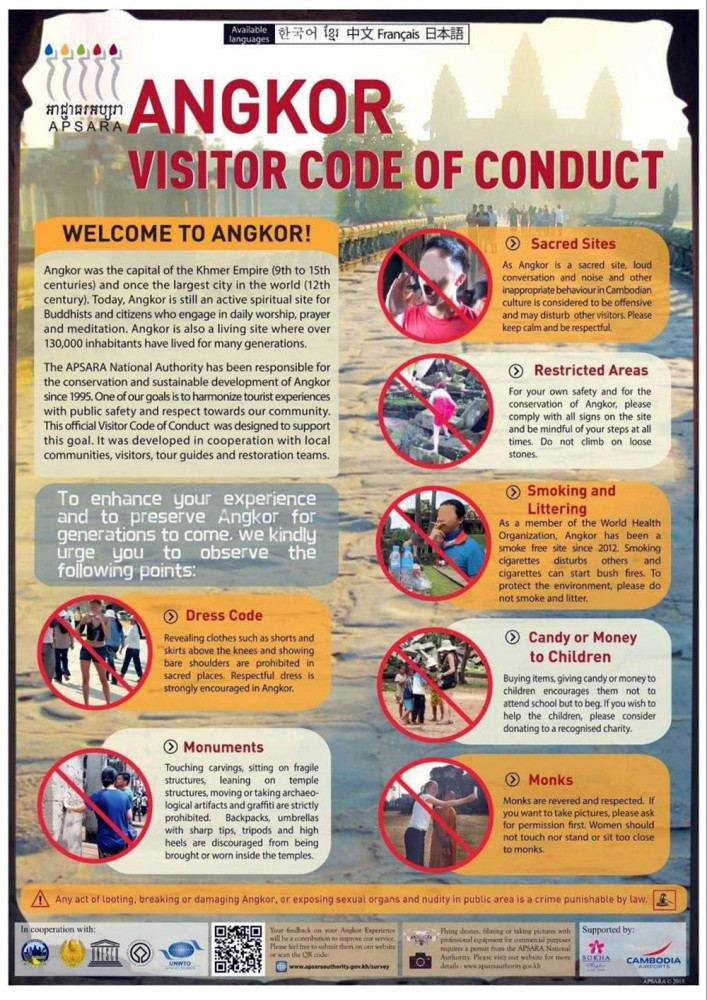
The notice further called on visitors to dress appropriately and respect the Angkor Visitor Code of Conduct while visiting the heritage site.
As rainy conditions may lead to an increase in insects in forested areas, tourists were advised to use insect repellent. Visitors were also urged to follow all warning signs and comply with instructions from tour guides and on-site authorities.
Regarding wildlife, the APSARA Authority strongly advised against feeding or directly interacting with monkeys at the site. The authority warned that such behaviour can negatively affect the animals’ natural habits, increase their dependence on humans, and pose health and safety risks, including disease transmission and dangerous human-animal encounters.
By C. Nika