KH
KH  FR
FR  AR
AR CN
CNOp-ed: From Hiroshima to the Indo-Pacific: Japan’s Global Message of Peace and Human Security
AKP Phnom Penh, August 17, 2026 --
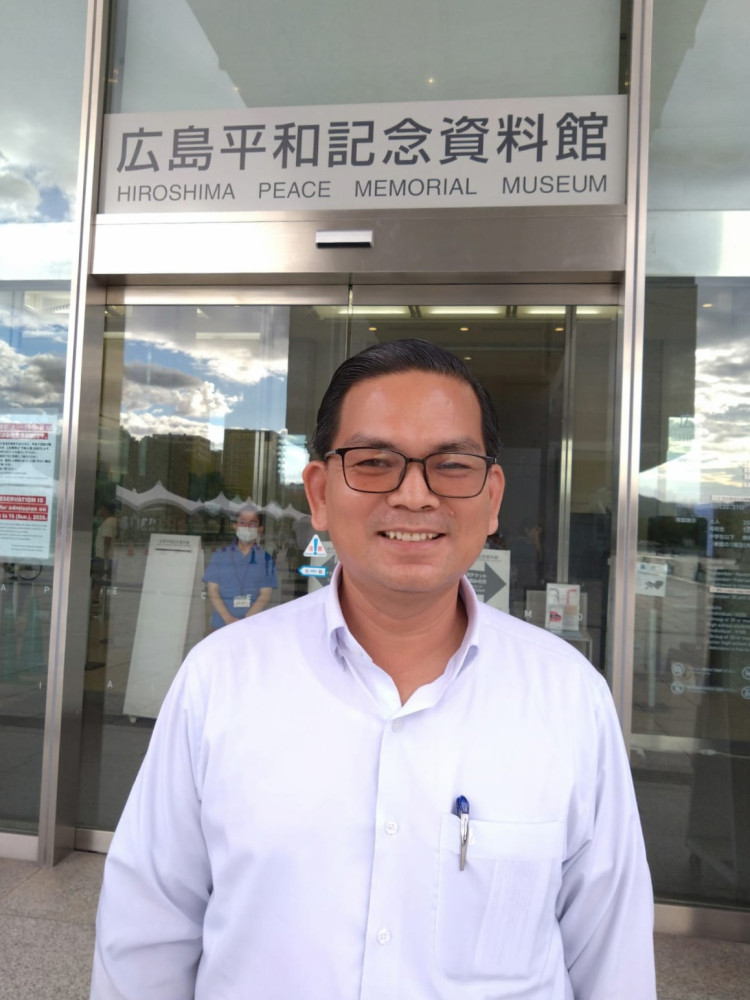
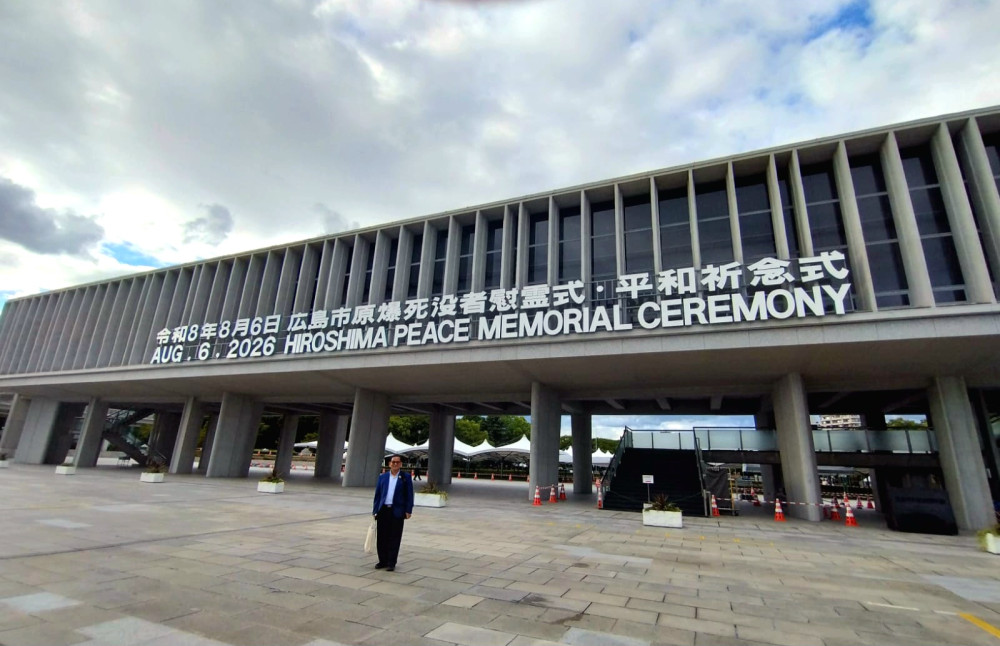
There are places we visit and remember, and there are places that change the way we think about humanity. For me, Hiroshima belongs to the latter. Standing at the Hiroshima Peace Memorial Park, visiting the Peace Memorial Museum, offering flowers at the Memorial Cenotaph, and listening to the testimony of an atomic-bomb survivor were among the most profound moments of my visit to Japan. Hiroshima is not simply a city that remembers the tragedy of war. It is a living message that even from unimaginable destruction, humanity can choose reconciliation over revenge, peace over war, and hope over hatred.
The atomic bombing of Hiroshima on 6 August 1945 by the U.S. represents one of the darkest chapters in human history. Around 140,000 people are estimated to have died by the end of that year, while approximately 92 per cent of the city’s buildings were destroyed or burned. Yet Hiroshima’s story did not end in destruction. Its citizens, local authorities and national institutions worked together to rebuild infrastructure, restore livelihoods and, ultimately, redefine Hiroshima from a military city into an international city of peace.
What impressed me deeply is that Hiroshima has transformed painful memory into something constructive. Its suffering is not preserved to cultivate hostility towards another nation or people. Instead, memory has become a source of education, moral responsibility and advocacy for nuclear disarmament. The victims are remembered not to perpetuate hatred, but to remind succeeding generations of the human consequences of war. Hiroshima thus teaches us that remembrance and reconciliation are not contradictory. Remembering the past can become a foundation for building a more peaceful future.
The reconstruction of Hiroshima offers another important lesson. Physical reconstruction alone is never enough. Roads, schools, hospitals and economic activity must be restored, but societies emerging from devastation must also rebuild confidence, dignity and hope. Hiroshima’s transformation into a “peace memorial city” demonstrates how reconstruction can be linked to a larger moral purpose. Peacebuilding becomes sustainable when institutions, communities and citizens share ownership of that purpose.
This experience has particular relevance for Cambodia. Our country also endured decades of war, genocide, internal conflict and national destruction. The historical circumstances of Cambodia and Hiroshima are very different, and their experiences should not be equated. Yet both remind us that rebuilding a society requires more than repairing physical damage. It requires restoring human dignity, educating future generations, preserving historical memory and creating institutions capable of sustaining peace.
Importantly, the connection between Hiroshima and Cambodia is not merely symbolic. Since 2005, Hiroshima Prefecture has worked with the Japan International Cooperation Agency under the JICA Partnership Program to support Cambodia’s post-conflict reconstruction and human-resource development, particularly in education in agricultural areas and the training of primary-school teachers. Cooperation has also extended to health and sanitation through universities, medical professionals and NGOs, while people-to-people initiatives contributed to the establishment of the Cambodia-Hiroshima House in Phnom Penh. Hiroshima has therefore translated its own experience of reconstruction into practical solidarity with societies recovering from conflict.
This offers promising ground for deeper Cambodia–Japan cooperation. Peace education, preservation of historical memory, youth exchanges, reconciliation studies and human-resource development could become stronger components of bilateral academic and people-to-people relations. Cambodia has its own painful historical experience and its own lessons of recovery and reconciliation to share. Dialogue between Hiroshima and Cambodia should therefore be a two-way process of learning about how societies remember tragedy without allowing that tragedy to determine their future.
Hiroshima’s message also helps us understand the human dimension of Japan’s wider diplomacy. The updated Free and Open Indo-Pacific should not be seen only through the narrow lens of geopolitical competition. Its greater value lies in promoting an Indo-Pacific that is free and open, governed by the rule of law, respectful of diversity, inclusive in participation and based on equal partnership. Connectivity, resilience, maritime safety and cooperation in addressing shared challenges are meaningful only when they ultimately improve the security and dignity of people.
This is where Hiroshima and the Indo-Pacific meet conceptually. A regional order cannot be genuinely free and open if it is built only on strategic competition, military calculations or spheres of influence. It must also create conditions in which smaller and larger states can coexist peacefully, disputes are managed through dialogue and international law, and development gives people greater freedom from fear and want. For Cambodia and ASEAN, such an inclusive interpretation is especially important. The Indo-Pacific should remain a region of cooperation rather than become an arena of confrontation.
Hiroshima also gives special moral weight to Japan’s advocacy for nuclear disarmament. At a time of intensifying geopolitical rivalry and continuing nuclear risks, Hiroshima reminds us what strategic statistics cannot: once nuclear weapons are used, their consequences extend far beyond military objectives and across generations. The difficulty of achieving nuclear disarmament cannot become a reason for abandoning the goal. Risk reduction, arms control, non-proliferation and the preservation of the norm against nuclear use remain shared responsibilities.
I left Hiroshima with sadness, but also with hope. Its journey from destruction to reconstruction, and from remembrance to peacebuilding, demonstrates that the legacy of tragedy does not have to be revenge; it can become responsibility. For Cambodia, Hiroshima is more than a historical lesson. It is also a partner in transforming the experience of suffering into education, reconstruction and peace. From Hiroshima to the wider Indo-Pacific, Japan’s enduring message is therefore both simple and powerful: remember the past, protect human dignity, build peace through cooperation, keep the door to diplomacy open, and ensure that future generations never again endure the tragedies that previous generations have suffered.
By Dr. Kin Phea
An alternate member of Royal Academy of Cambodia and Director-General of International Relations Institute of Cambodia.
(Views expressed are personal.)